

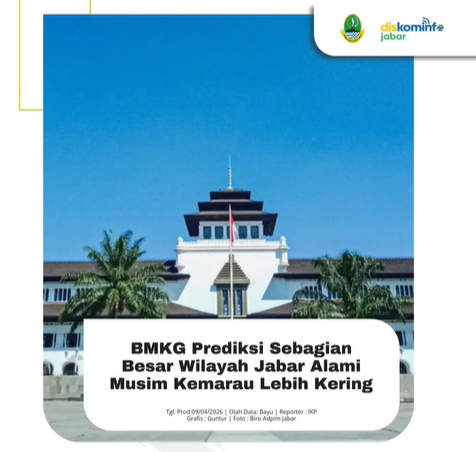
PORTALJABAR, BANDUNG CITY - Most areas in West Java are predicted to experience a drier dry season than usual in 2026. In fact, this year's dry season is said to be drier than the climatological average in the last 30 years.
This was conveyed by the Weather Forecaster of the West Java Meteorology, Climatology and Geophysics Agency (BMKG) Climatology Station, Vivi Indhira, in the 2026 West Java Dry Season Press Release event held by BMKG online, Tuesday (14/4/2026).
Vivi said that 93 percent of West Java will experience below-normal rainfall during the dry season. This means rainfall will be lower than the normal average, making this year's dry season drier than usual.
Meanwhile, a number of areas experiencing this condition include Bandung City, Tasikmalaya City, Cianjur, Sukabumi, Bekasi, Cirebon and Kuningan.
Only a small part or 7 percent of the area in West Java experienced normal rainfall compared to normal conditions.
In addition to being drier, this year's dry season is also predicted to last longer in most, or 81 percent, areas of West Java. Areas likely to experience these conditions include Sukabumi, Karawang, Indramayu, and Tasikmalaya City.
Only a small portion, or 10 percent of the region, will experience a dry season that is comparable to normal, particularly in central and eastern West Java. Meanwhile, 7 percent of areas in West Java, such as Cimahi, will experience a shorter dry season than normal.
Meanwhile, specifically in Bogor City, rain is predicted to occur throughout the year so that the difference between the dry and rainy seasons is not visible.
Vivi said that most or 56 percent of areas in West Java will begin entering the dry season in May 2026, such as Sumedang, Kuningan, and Tasikmalaya.
Then, 30 percent of areas in West Java will enter the dry season in June 2026, including Bandung City, West Bandung Regency, Cimahi, Cianjur and Sukabumi City.
Only 10 percent of areas in West Java will have entered the dry season in April 2026 and 2 percent in March 2026.
Furthermore, the BMKG predicts that most, or 90 percent of areas in West Java, will experience the peak of the dry season in August 2026.
BMKG Recommendations
Facing a drier and longer dry season, the BMKG recommends optimizing the use of reservoirs and dams. Furthermore, the construction and rehabilitation of reservoirs or water reservoirs needs to be accelerated.
"Anticipate the clean water crisis by distributing water and drilling emergency wells. We also need to conserve water," said Vivi.
In the agricultural sector, he urged farmers to adjust their planting calendars by avoiding planting during the peak of the dry season. Use drought-tolerant plant varieties or switch to secondary crops. Optimize water-efficient irrigation.
A drier and longer dry season also carries the potential for disasters. Therefore, the BMKG (Meteorology, Climatology, and Geophysics Agency) urges relevant parties to be prepared for drought and forest fires.
In addition, to ensure that the dry season does not impact the energy and environmental sectors, it is necessary to ensure the water capacity in the dam for the operation of hydroelectric power plants (PLTA).
Equally important, during the dry season, the public is urged to maintain their health. "Anticipate an increase in acute respiratory infections due to smoke. Also, monitor sanitation quality when water supplies are reduced," said Vivi.
 Share News Via
 facebook
 twitter
 whatsapp
 email
email