

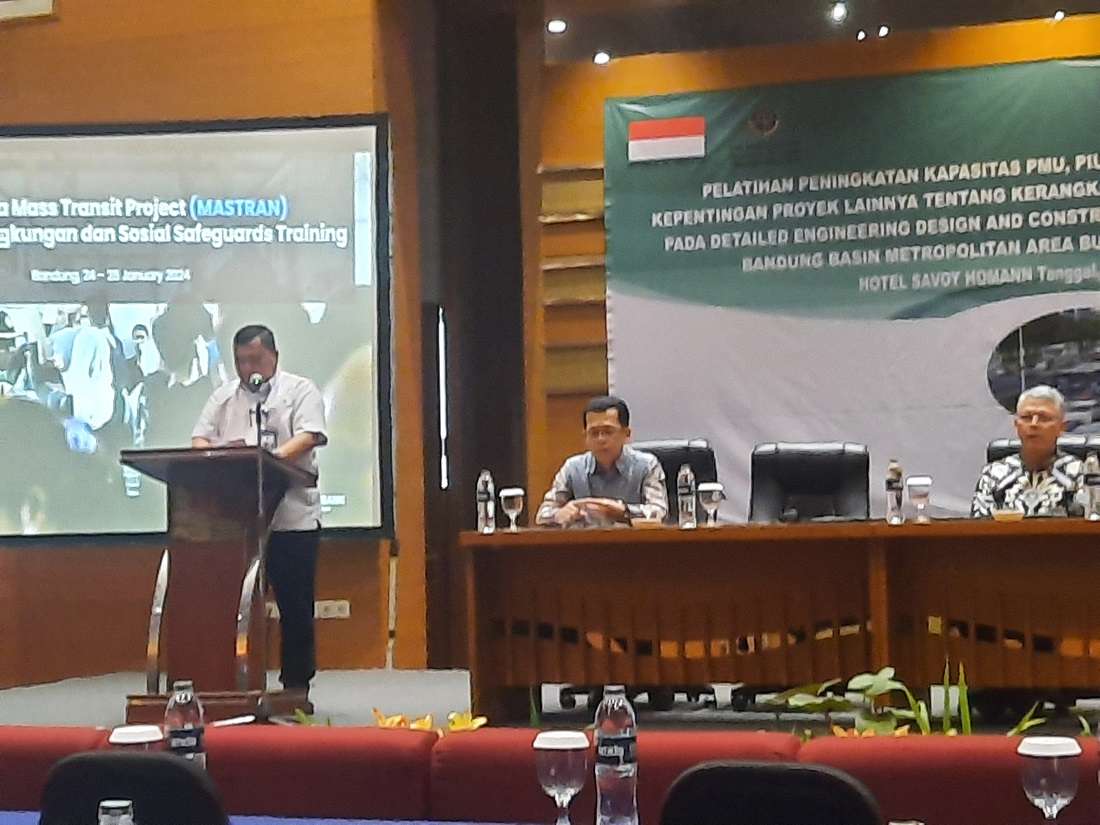
PORTALJABAR, BANDUNG CITY - The Ministry of Transportation is targeting the Greater Bandung Bus Rapid Transit (BRT) mass public transportation mode to operate by mid-2024.
This was conveyed by the Director of Traffic at the Director General of Land Transportation of the Ministry of Transportation, Ahmad Yani, at the Capacity Building Training for Greater Bandung BRT Stakeholders, in Bandung City, Monday (22/1/2024).
Towards mid-year BRT operations, stakeholders received outreach and training from the World Bank as the funder for three days, Monday - Wednesday (22-24/1/2024).
The stakeholders consist of all regional government agencies, starting from the West Java Provincial Government as well as the district and city of Greater Bandung including Bandung City, Bandung Regency, Cimahi City, West Bandung Regency and Sumedang Regency.
"We must provide a comprehensive understanding to all stakeholders, both government and non-government, about all processes, so that in their implementation everyone knows their rights and obligations," said Ahmad Yani.
According to him, the World Bank explained all the conditions that must be met in developing the BRT mass transportation system. "They will later explain what conditions must be met, starting from planning, implementation and evaluation," he said.
World Bank Senior Social Development Specialist Mohammad Yasin Nurri explained the initial steps that stakeholders must take in developing BRT, starting from labor to mitigating social and environmental impacts.
"There are ten aspects that must be considered, among the most important are labor issues and all its derivative aspects as well as social and environmental impact issues. This is very important," explained Nurri when he was a resource person.
Nuri explained that every development will definitely have a negative or detrimental impact, especially for the community. This is what must be mitigated and minimized.
"The negative impact can be air pollution, noise, traffic jams and so on. The social impact can even be sexual harassment, worker and community conflicts. This is very important to take into account," concluded Nurri.
 Share News Via
 facebook
 twitter
 whatsapp
 email
email