

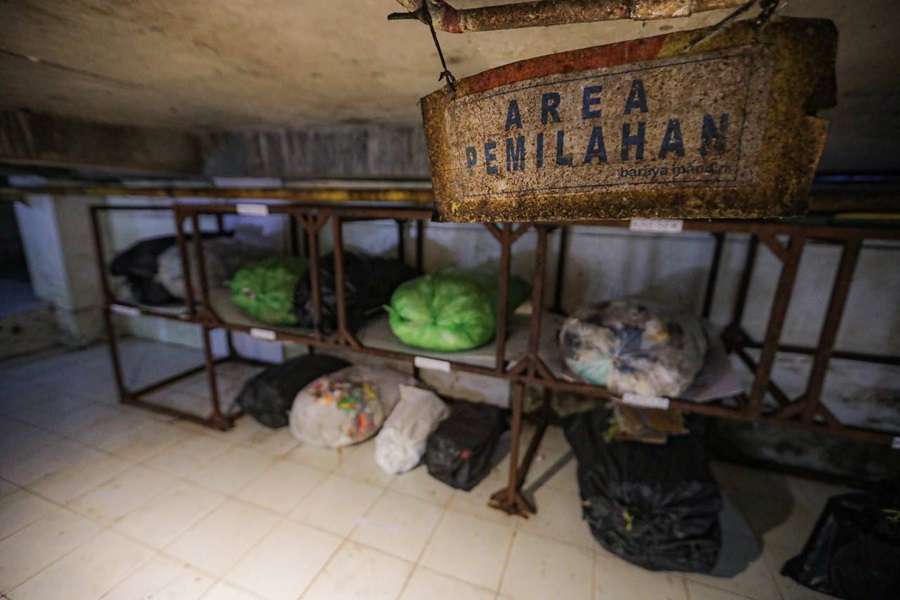
PORTALJABAR, BANDUNG CITY - The Paris Van Java Mall (PVJ) shopping center demonstrates a strong commitment to sustainable waste management. For nearly a decade, the mall has consistently managed its own waste management, reducing operational costs while generating economic value from the processed waste.
PVJ General Affairs, Budi Santosa, revealed that waste management at his shopping center had begun in 2014 and continues to develop to date.
Every day, PVJ produces an average of 3 - 4 tons of waste, with the volume increasing significantly at weekends.
"Around 60 percent of the waste produced is organic, with the rest being inorganic and residue. We process organic waste using a maggotization system, and so far it's been working well without any significant issues," Budi said in an interview on Thursday (May 8, 2026).
He explained that the maggotization method utilizes Black Soldier Fly (BSF) larvae to decompose organic waste. The resulting compost, or organic fertilizer, is then used for PVJ's plantations in the Lembang area.
Of the total of approximately 3.5 tons of daily waste, approximately 2 tons is organic waste, which is processed. This process produces approximately 13 to 15 kilograms of kasgot per day. Meanwhile, inorganic waste is managed through a collaboration with a third party.
Waste management at PVJ is integrated, starting at the tenant level. There are approximately 350 tenants in the area, with approximately 30 percent of them being food and beverage tenants, the primary contributors to organic waste.
Each tenant is provided with a special bucket for sorting organic waste. Staff then pick up the waste directly from each tenant at night. However, PVJ enforces strict waste sorting regulations.
"If there's still unsorted waste, we won't pick it up. We'll even impose a fine of Rp 500,000 and prepare a violation report. This demonstrates our commitment to ensuring all tenants are disciplined," Budi explained.
According to him, the policy has been publicly announced for a long time, so most tenants are now disciplined in sorting their waste. However, there are still one or two violations, usually due to negligence.
These consistent efforts have proven to have a positive impact, not only on the environment but also economically. Before establishing its own waste management system, PVJ had to spend up to IDR 40–50 million per month on waste management.
"Now, that cost can be reduced to just around Rp. 20 million. This means that, in addition to protecting the environment, it's also cost-effective," he added.
Meanwhile, unprocessed residual waste is still disposed of at landfills (TPA). However, with the current system, the volume of waste sent to TPA has been significantly reduced.
Budi stated that his team will remain committed to maintaining consistent waste management at PVJ. He believes the increase in visitor numbers must be matched by an improved waste management system.
"We struggle with trash every day, especially on weekends when the amount increases. But we will continue to strive to do our best for the environment," he said. (Bandung City Communications and Information Office/rka)
 Share News Via
 facebook
 twitter
 whatsapp
 email
email