

PORTALJABAR, BANDUNG CITY - This year's New Student Admissions System (SPMB) no longer includes the School Dropout Prevention (PAPS) program as a special program, but rather a philosophy: ensuring that no children drop out of school.
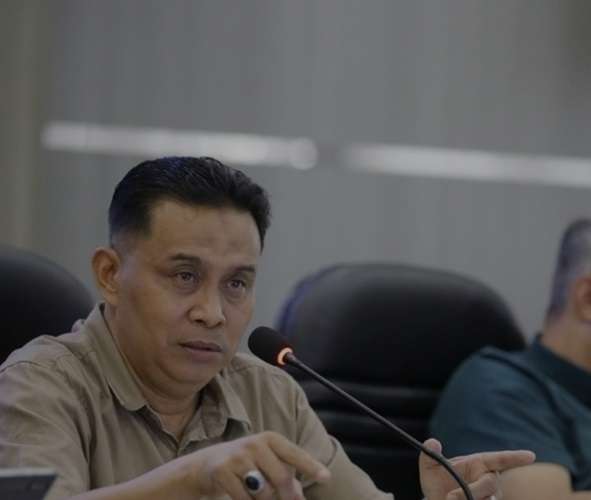
This was conveyed by the Secretary of the West Java (Jabar) Education Office (Sekdisdik), Deden Saepul Hidayat in the 2026 SPMB External Public Test Meeting at the Dewi Sartika Hall of the West Java Education Office, Tuesday (3/3/2026).
The Education Secretary explained that, in general, the 2026 SPMB regulations are not significantly different from the previous year. However, there are several adjustments based on the latest circular from the Ministry of Primary and Secondary Education. "One of them is that the PAPS program will no longer be a special program. However, the essence remains the same: ensuring that no children drop out of school," he explained.
To anticipate potential under-accommodation, he continued, the West Java Education Office will conduct a survey of ninth-grade junior high school (SMP/MTs) students. "This survey is targeted to reach at least 98 percent of students. Through this data collection, the government can map student interests in public, private, and Islamic schools, as well as map the needs of affirmative action pathways and regional distribution," the Education Office Secretary explained.
This step is expected to provide an early indication of potential overcrowding in certain schools, especially in densely populated areas like Depok. "If public school capacity is limited, alternative schemes will be prepared, including optimizing private schools," he said.
Regarding the study group (rombel) regulations, the Education Secretary explained that there are exceptions for groups exceeding 36 students under certain conditions. These include areas without public or private schools, or areas with insufficient capacity even after merging. "Currently, there are still a number of sub-districts in West Java that lack public or private schools, so this policy is a solution to equalize access," he explained.
Furthermore, he added, the West Java Education Office is also strengthening affirmative action, including for children living in orphanages or those with "state child" status. The government is requesting that data be submitted early so that their educational rights can be facilitated in a timely manner.
"The issue of cooperation on school land use is also a concern, considering that a number of public high schools and vocational schools are built on land owned by the Indonesian National Armed Forces (TNI), villages, or other agencies. This is why it's important to have the support of all parties to ensure that administrative issues don't hinder educational services," he said.
Foreign Workers Become Assessment Components
Meanwhile, regarding academic selection, he added, this year the Academic Ability Test (TKA) will be one of the assessment components, along with report card grades. "The weighting of the TKA will likely be gradually increased to maintain objectivity and prevent grade manipulation," he explained.
The Secretary of the Education Office hopes that this public examination will provide an open space for conveying criticism and suggestions based on regulations and the best interests of students.
"With the collaboration of all parties, we are optimistic that this year's SPMB will be more transparent, fair, and accountable, while also maintaining public satisfaction with education services in West Java," he concluded. (Apun)
 Share News Via
 facebook
 twitter
 whatsapp
 email
email