

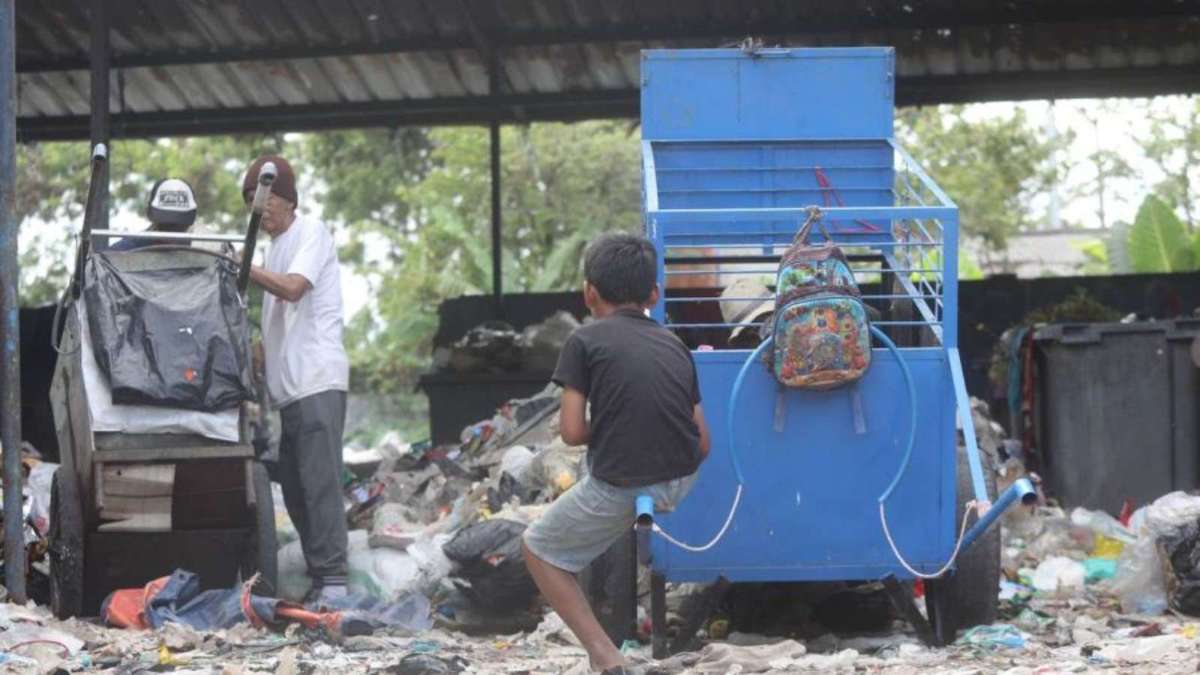
PORTALJABAR, BANDUNG CITY - Secretary of the Bandung City Environmental Service, Dadang Setiawan, reminded the public of the importance of vigilance, especially during the dry season, regarding waste burning activities.
Uncontrolled burning can produce smoke and potentially affect air quality in the surrounding environment.
"Don't assume that waste is safe to burn. If it burns and causes an impact, the consequences could be even greater," he said during the 2026 Bandung City Air Quality Socialization held at the Harris Hotel & Conventions on Thursday (September 17, 2026).
According to him, air quality is an environmental issue that requires collective attention because it is directly related to people's daily activities.
"We breathe every day, 24 hours a day, for the rest of our lives. Therefore, air quality is very important," he said.
According to Dadang, air quality in urban areas is influenced by various factors. Besides motor vehicle emissions, potential pollution can also come from combustion activities, including uncontrolled waste burning.
He gave an example of handling a fire incident involving waste material at a location in Bandung City.
This condition has had an impact on the surrounding environment, so collaborative handling is required with a number of related elements.
"When pollution occurs, we must work together to address it. It can't be done by just one regional agency," he said.
He also highlighted the importance of synergy across regional agencies in addressing environmental issues.
According to him, air quality management cannot be separated from various other environmental aspects, such as waste management, the existence of green open spaces, and controlling activities that have the potential to cause pollution.
"How do we address the environmental impacts that occur? Air quality is a vital component of our environmental quality," he said.
Meanwhile, the Head of the PPKLH Division of the Bandung City Environmental Service, Fiziarita, in her report said that managing urban air quality requires a strong and accurate database.
According to him, efforts to reduce emissions cannot run optimally without clear mapping of pollution sources and regular monitoring of ambient air concentrations.
"This outreach program aims to build a shared understanding among regional agencies regarding the dynamics of emissions and air quality in Bandung City," he explained.
The activity also aims to disseminate the profile and inventory of emissions and the air quality status of Bandung City to stakeholders.
In addition, participants gain technical insight into air monitoring methodology and pollution source characterization.
Fiziarita added that this activity is expected to strengthen coordination, synergy, and integration of programs across regional agencies in supporting air pollution control policies.
"We hope that all regional government agencies will have the same understanding so that air pollution control programs can be implemented in an integrated manner," he said.
To strengthen the socialization material, the Bandung City Government presented the Main Expert Researcher of BRIN, Prof. Dr. Muhayatun Santoso, and Lecturer of the National Institute of Technology (Itenas), Dr. Didin Agustian Permadi, ST, M.Eng.
Prof. Dr. Muhayatun Santoso provided material regarding monitoring ambient air quality and characterizing sources of air pollution.
Meanwhile, Dr. Didin Agustian Permadi discussed the inventory of air pollutant emissions in urban areas.
Through these activities, the Bandung City Government encourages data-based and collaborative air quality management, so that pollution control measures can be implemented in a more targeted and sustainable manner.
This effort is also part of the Bandung City Government's commitment to maintaining environmental quality and supporting the realization of a healthy and sustainable Main Bandung.
(Bandung City Communications and Information Service/rka)
 Share News Via
 facebook
 twitter
 whatsapp
 email
email