

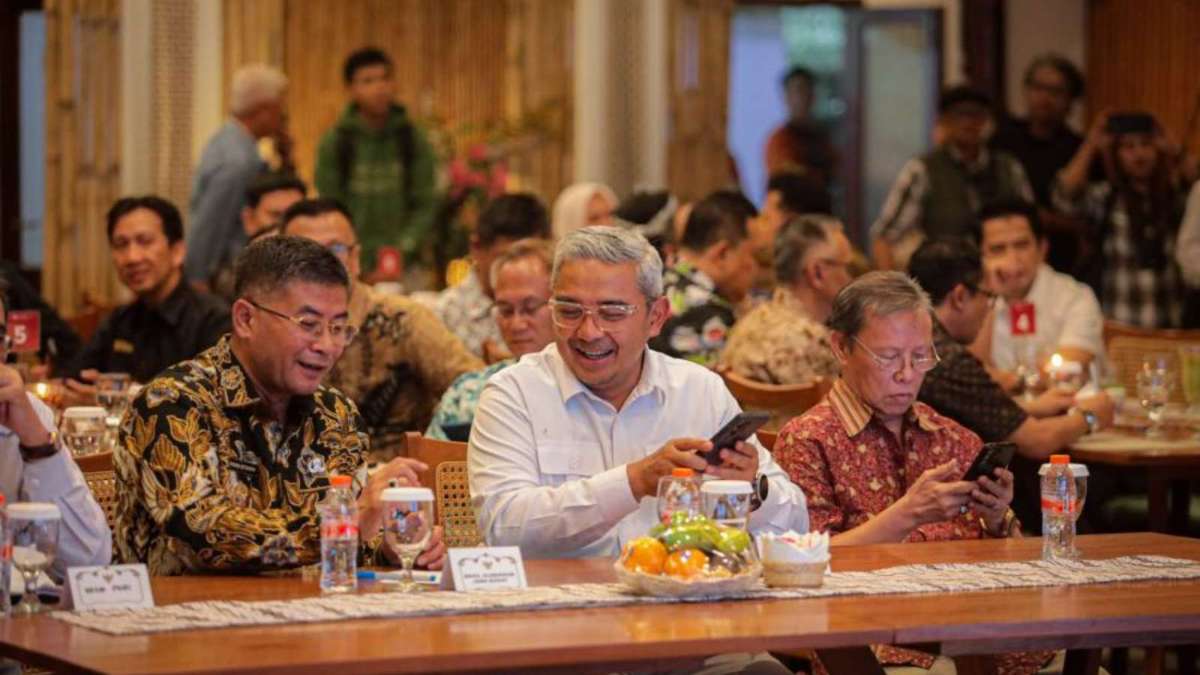
PORTALJABAR, BANDUNG CITY - The Bandung City Government is promoting culinary and sports tourism as economic drivers that open up business opportunities for the community while attracting tourists.
Bandung Mayor Muhammad Farhan conveyed this when attending the inauguration of the West Java Cafe and Restaurant Association (AKAR) management (26/8/2026).
Farhan believes that Persib Bandung is contributing to the economy through its matches and exclusive management of the Gelora Bandung Lautan Api (GBLA) Stadium.
"Persib generates a lot of economic activity. With their exclusive management rights to GBLA, they provide numerous opportunities for entrepreneurs to enter the GBLA area and develop culinary tourism there," said Farhan.
Persib matches attract spectators from outside Bandung, thus increasing culinary and accommodation business activity around the location.
Farhan said that sports tourism can attract tourists and increase their spending on accommodation, food, shopping, and sightseeing.
"Sports tourism brings a lot of income to the city of Bandung," he said.
Sporting activities such as running competitions also attract participants from outside the area who stay for several nights and spend their money in Bandung.
"People from outside Bandung come to Bandung to participate for two nights. This is an opportunity we call the trickle-down effect," he said.
According to Farhan, culinary is also an important part of Bandung's identity because tourists need places to eat and accommodation during their visit.
"The culinary and accommodation businesses in Bandung are very important. This is why I really appreciate the presence of the cafe and restaurant association (AKAR)," he said.
Farhan hopes that AKAR will become a forum for communication and business development without limiting competition through cartel practices.
Healthy competition is considered to encourage business actors to continue innovating so that the West Java culinary industry becomes stronger and more competitive.
"The challenge for us all is how to strengthen unity among business actors. Clashes between business actors' interests are something we should avoid within the framework of healthy competition," he said.
Farhan also encourages innovation to increase the selling value of local foods such as cilok, cireng, and seblak, which have now developed into high-value products.
"Cilok, cireng, and seblak were simple foods when we were little. But now, you can eat cireng, cilok, and seblak in the street for Rp 100,000 a plate," he said.
According to Farhan, this innovation proves that local food can develop into a tourist attraction as well as a value-added economic product.
He asked business owners to not stop improving their management, but to continue developing menus and culinary experiences that convey cultural identity.
"This means that the creativity of AKAR's practitioners and members shouldn't stop at management. There must still be innovations that add value to the menu itself as part of our cultural heritage," he said.
West Java Deputy Governor Erwan Setiawan believes that culinary arts are directly related to the economy, employment, tourism, culture, and regional identity.
"When we talk about culinary, we're not just talking about food and drink. We're talking about the economy, jobs, tourism, culture, and identity of West Java," said Erwan.
West Java has a wealth of culinary delights from 27 regencies and cities, including nasi timbel, karedok, lotek, batagor, surabi, peuyeum, and seblak.
Erwan hopes that AKAR, during the 2026-2031 period, will strengthen innovation and branding of local culinary arts to increase their recognition and economic value.
He asked AKAR to be a driver of a healthy business ecosystem while opening up investment space without forming a cartel.
"Anyone from anywhere is welcome to do business in West Java. Please feel free to invest in West Java. But I emphasize that employees must be West Javanese, and the food must be West Javanese," he explained.
Erwan sees the improvement in transportation access between Jakarta and Bandung as opening up greater opportunities for tourists who come specifically to enjoy culinary delights.
"We must seize these opportunities. Our challenge today and going forward is how to elevate this delicious food into a strong business. How can local culinary delights have a strong brand," he said.
He asked the AKAR management not only to run the organization, but to become the driving force of the West Java culinary industry.
"Don't just be an organization administrator. Be a driving force behind the culinary ecosystem in West Java," he said.
(Bandung City Communications and Information Service/bhf)
 Share News Via
 facebook
 twitter
 whatsapp
 email
email