

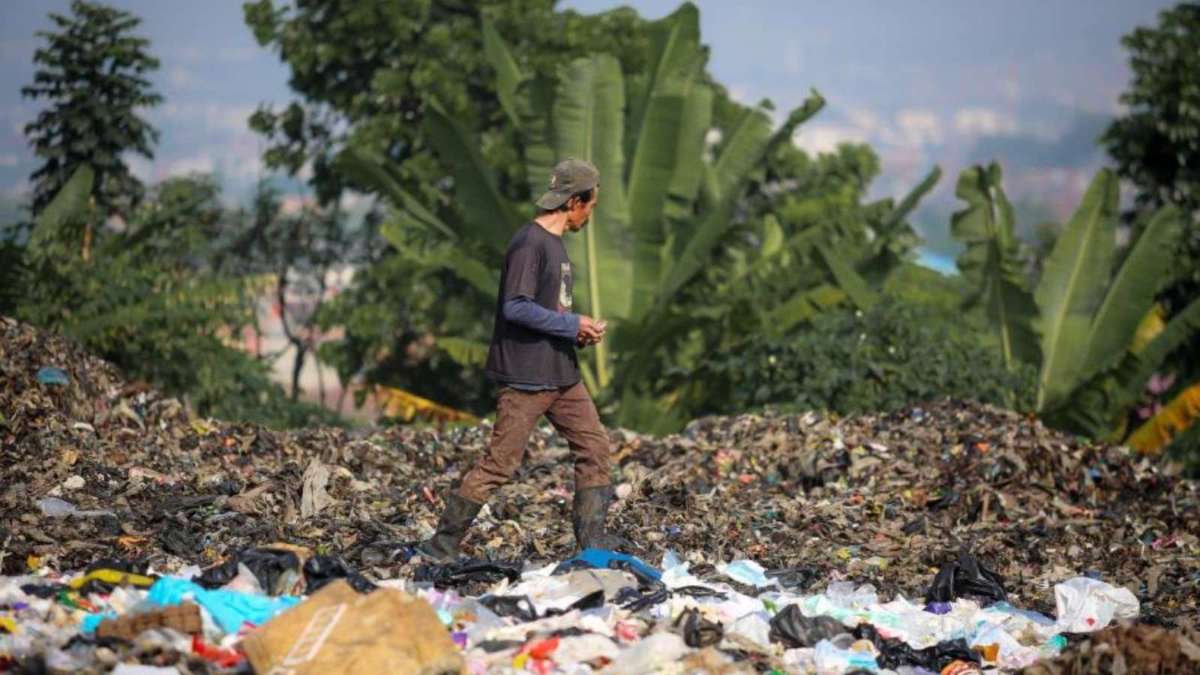
PORTALJABAR, BANDUNG CITY - Bandung Mayor Muhammad Farhan asked regional officials to prepare mitigation measures for the rainy season to anticipate flooding in a number of areas.
Farhan conveyed this while leading the Start of Work Roll Call which was combined with the signing of the Integrity Pact of High-Ranking Officials and sub-district heads at the Bandung City Hall Plaza (14/9/2026).
He asked the Regional Secretary of Bandung City together with the Water Resources and Highways Agency (DSDABM) to prepare mitigation measures for the rainy season from 2026 to early 2027.
"Therefore, I have asked the Regional Secretary and the Water Resources and Highways Agency to prepare a presentation this week on preparations for the 2026 to early 2027 rainy season," Farhan said.
According to him, preparation is necessary because a number of points in Bandung City are still prone to flooding due to suboptimal environmental management.
"There are several areas in Bandung City that are prone to flooding due to poor environmental management. We are facing the consequences, so we are preparing mitigation measures to address the risks," he said.
In addition to flooding, Farhan highlighted the need to strengthen waste management ahead of the rainy season to prevent environmental problems.
"The pile of garbage doesn't feel particularly pressing, just a few spots. Because the waste is drier than during the rainy season, most of it can be transported to the Sarimukti Landfill," he said.
However, this condition should not make the government complacent because the City of Bandung still depends on the West Java Provincial Government's policy regarding the management of the Sarimukti TPA.
The West Java Provincial Government's intervention in opening up waste collection quotas is part of a scheme to address Bandung City's limited quota.
"So you'll see the provincial government intervene in a way that's been carefully designed. If only the city government handled the transportation, the quota would be limited. So, of course, provincial government intervention is needed to open up the waste transportation quota to the Sarimukti Landfill," Farhan explained.
Since 2005, Bandung City has not had its own final waste processing facility, so waste reduction needs to be carried out from the source.
The agreement regarding waste management in Legok Nangka is under coordination between the West Java Provincial Government and the Greater Bandung agglomeration area and its surroundings.
"This means that in the Bandung City Government, we must focus our waste management efforts upstream, at the neighborhood level (RT), neighborhood level (RW), and sub-district level. We must ensure this happens," he stressed.
To strengthen regional waste management, the Bandung City Government will prepare waste processing facilities at the sub-district level.
"I will directly invite special procurement for waste processing facilities in the sub-district. The budget is not small at all," he said.
The program complements existing waste management programs, including Kang Pisman and various other environmental programs.
The Bandung City Government is also strengthening the number of waste sorting and processing officers at the RW level, which are currently available in 1,597 RWs.
"The number of sorting officers in 1,597 neighborhood units (RW) is still far from sufficient. Of course, that means we will continue to add more," he said.
Farhan said that Bandung City's official waste production is around 1,500 tons per day, but the volume is estimated to be closer to 2,000 tons.
Given these conditions, Farhan believes that waste management needs to shift from a transportation orientation to management from the source.
Strengthening waste management at the neighborhood unit (RT), community unit (RW), and sub-district levels is also part of the preparedness to face the rainy season, which has the potential to increase flooding.
Unmanaged waste has the potential to clog water channels, thus worsening the problem of flooding in a number of areas.
Therefore, Farhan asked all regional and territorial agencies to map out the problems and prepare preventive measures before the rainy season arrives.
"Every region, every agency is starting to pay attention and plan," he said.
Farhan hopes that these preparations will make Bandung better prepared for weather changes and reduce the risk of flooding.
Upstream waste management is also expected to reduce pressure on the transportation system and capacity of the Sarimukti Landfill.
"We are preparing mitigation measures to face the risks," he concluded.
(Bandung City Communications and Information Service/bhf)
 Share News Via
 facebook
 twitter
 whatsapp
 email
email