

PORTALJABAR, BANDUNG CITY - The DPRD Secretariat has a strategic role in ensuring that institutional relations between the legislative and executive branches run effectively and produce policies that have a real impact on society.
Therefore, the DPRD secretariat apparatus is required not only to be strong in administration, but also to understand the direction of development, master data, and be able to read problems at a macro level.
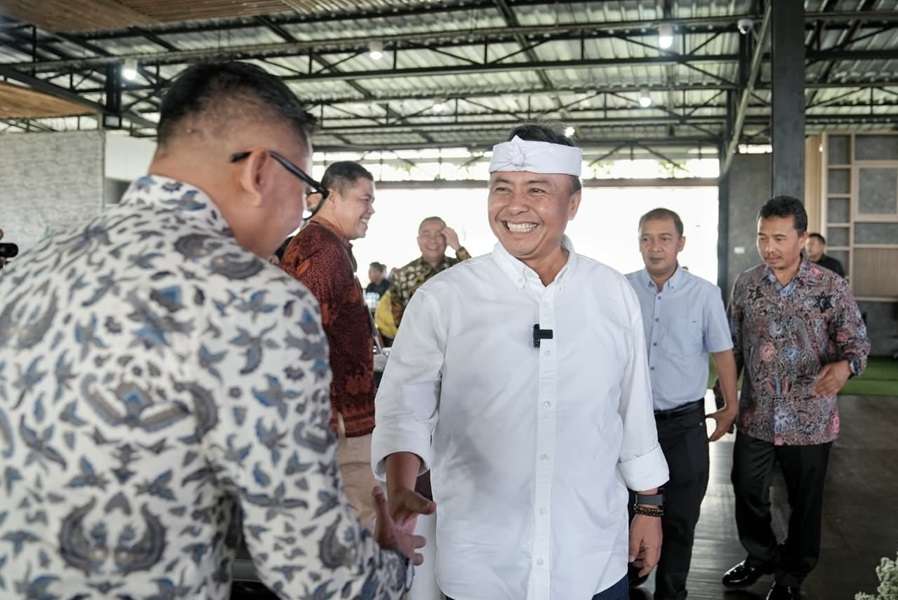
This message was conveyed by the Regional Secretary of West Java Province, Herman Suryatman, when giving a briefing at the Working Meeting of the Association of Secretaries of the Indonesian Provincial DPRD (ASDEPSI) regarding Strengthening the Role of the DPRD Secretariat in the Institutional Relations between the DPRD and the Executive, on the Rooftop of the West Java Provincial DPRD Building, Bandung City, Thursday (15/10/2026).
Representing West Java Governor Dedi Mulyadi, Regional Secretary Herman emphasized that development planning must begin with the ultimate goal, not with budgetary, financial, or administrative matters. Although these three are instruments for achieving development goals, they are not the goals themselves.
"Start from the end. In planning, I usually start from the end. Not from the budget, not from finance, not from administration. Those are just tools," was Herman's main message in his briefing.
According to him, a results-oriented approach must be the foundation for all elements of government, including the Regional People's Representative Council (DPRD) Secretariat. Every program and policy needs to have clear, measurable, and progressive targets to drive real change.
"The target is progressive, because a target that is not progressive will not scare us, but a target that scares us is what will push us to achieve our goals," said Herman.
Furthermore, he emphasized that the measure of government success is not merely the implementation of activities or the absorption of the budget, but rather the changes felt by the community.
In this context, Herman hinted at the importance of building a bureaucracy that is oriented towards impact or outcomes, not solely on program implementation or output.
"The government must be able to explain what changes result from each policy and the extent to which those changes address the needs of the community," he said.
For example, reducing poverty, reducing unemployment, and improving the quality of human development must be part of the success indicators that are taken seriously.
The West Java Regional Secretary also highlighted that the bureaucratic apparatus has the responsibility to maintain the sustainability of development, while ensuring that policies remain effective even amidst changes in leadership.
Therefore, the DPRD secretariat apparatus needs to understand the substance of governance and development comprehensively. He believes that understanding regional issues, macro-development indicators, and community needs is the foundation for formulating public policy.
Herman also emphasized the importance of data mastery down to the smallest regional level. He believes a data-driven development approach allows the government to be more proactive and targeted.
"Without adequate data control, programs simply operate based on habit or waiting for problems to arise, rather than responding to the real needs of the community," he said.
In the institutional relationship between the DPRD and the executive, Herman assessed that the DPRD Secretariat has an important position to strengthen communication, provide accurate information, and help DPRD leaders and members obtain a complete picture of development issues.
This role is closely related to the implementation of the DPRD's legislative, budgeting, and oversight functions. These three functions must be directed to support the primary goal of regional government, namely improving public welfare.
Therefore, the DPRD Secretariat is expected to be able to become an effective liaison between the DPRD's needs and the substance of policies prepared by regional apparatus.
By strengthening the role of the Regional People's Representative Council (DPRD) Secretariat, Regional Secretary Herman hopes that the institutional relationship between the legislative and executive branches will become more productive, constructive, and results-oriented. The synergy between the two must ensure that regional policies are not limited to documents and discussions but truly deliver benefits to the public.
 Share News Via
 facebook
 twitter
 whatsapp
 email