

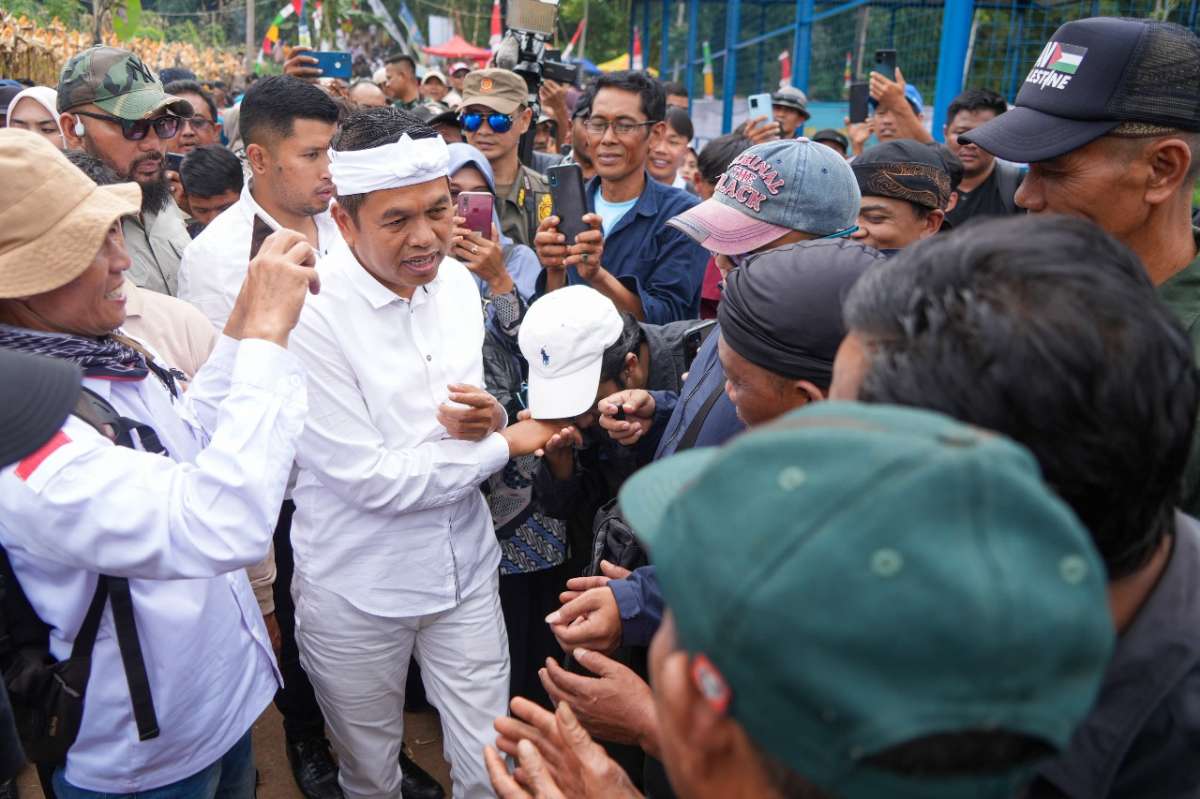
PORTALJABAR, DEPOK CITY - West Java Governor Dedi Mulyadi emphasized that the Poe Ibu Movement outlined in the Governor's Circular Letter (SE) is not a new movement, but rather an effort to strengthen the tradition of social concern that has long existed in West Java society.
"But some people understand that I'm going to collect a thousand rupiah from each person, but that's not true. The circular was issued as an appeal to revive social awareness, which has begun to decline," said KDM—Dedi Mulyadi's nickname—on Wednesday (October 8, 2025).
According to KDM, the spirit of mutual cooperation and solidarity among the people of West Java has long been growing in various forms such as jimpitan or rice perelek, and Gasibu (One Thousand Day Movement).
"I posted this and received a lot of positive comments. Some said they've been doing this movement for a long time in Tasikmalaya, and others in Garut and elsewhere. This means this tradition is preserved and continues to grow. I'm here to capitalize on it, ensuring it's digitized, regulated, and transparent, so that money can be tracked, and how much goes out," he emphasized.
KDM added that funds from this movement can be used directly at the RT/RW level down to the district/city level to help the community's social needs, especially in the fields of education and health.
Furthermore, KDM stated that the budget for health and education services has been broadly allocated in the West Java Regional Budget (APBD). However, there are still other matters that have not been addressed outside of the formal aspects, and these can be addressed through the Poe Ibu social movement.
He cited the Bale Pananggeuhan complaint center in Gedung Sate, which handles public complaints directly. Its operational funds come from the Poe Ibu social movement, which is participated in by civil servants.
"The use of funds is based on public complaints received through the neighborhood associations (RT/RW) and the regent/mayor. I personally opened a complaint at Gedung Sate, called Bale Pananggeuhan, with the budget coming from the One Thousand a Day movement specifically for civil servants. Complaints were also received by officers who are also civil servants," he explained.
In addition to reaching communities unfamiliar with digital technology, this complaint channel also strengthens synergy with official channels such as SP4N Lapor and Sapawarga. This way, every citizen report—whether from villages or cities—can be followed up quickly, coordinated, and effectively.
"Don't let residents complain on social media. If that happens, it means the government isn't functioning properly. Therefore, I ask neighborhood units (RT), community units (RW), and even regents and mayors to open up a complaint space so the government is truly present among the people," he stressed.
This social movement has also received a positive response from the community. One example is the Qoryatul Mobarokah Charity Foundation in Rancasalak Village, Kadungora District, Garut Regency, which has been running the "Thousand a Day" movement since 2023.
"Every Friday, two members of the foundation go around to two local neighborhood associations (RW) to collect coins. Thank God, we collect around Rp. 2 million every week," said the foundation's administrator, Ida.
The funds are used for various social activities, from purchasing land for public cemeteries, helping nursing homes, financing school fees for children, to helping sick residents.
"We also help nursing homes, school children, and even take sick people to the hospital, all of which are paid for," he said.
He said his foundation's initiative has attracted the attention of other neighborhood units (RW) who want to follow suit. He even stated that representatives from the Ministry of Social Affairs have met with the foundation to help secure the foundation's legal framework, which has now become a mainstay for local residents.
"The Poe Ibu Movement further encourages us to continue working selflessly to help residents," he said.
 Share News Via
 facebook
 twitter
 whatsapp
 email
email