

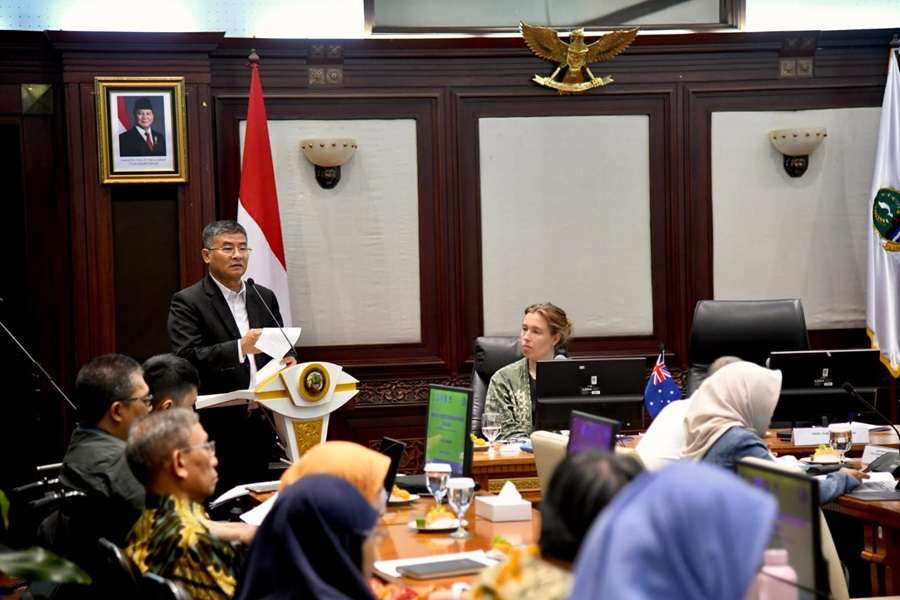
PORTALJABAR, BANDUNG CITY - The Deputy Governor of West Java, Erwan Setiawan, emphasized the importance of cross-sector collaboration in strengthening the regional health system through the Indonesia–Australia Partnership Program for Health Transformation (KITA SEHAT).
The Deputy Governor of West Java hopes that this program will not only increase activities, but also provide real added value for improving the quality of services and public health development.
This was conveyed by Erwan when giving a speech and direction at the Provincial Steering Committee Meeting of the KITA SEHAT Program in the Papandayan Meeting Room, Gedung Sate, Bandung City, Wednesday (28/10/2026).
"On behalf of the West Java Provincial Government, we express our appreciation to the Australian Government, the National Development Planning Agency (Bappenas), relevant ministries, the KITA SEHAT Team, and development partners who have committed to supporting health transformation, particularly in West Java," said Deputy Governor Erwan Setiawan.
According to Erwan, KITA SEHAT is a strategic opportunity to strengthen regional health systems through targeted collaboration, increasing government capacity, and developing policies that are responsive to community needs.
"With its regional characteristics and large population, West Java requires an integrated, inclusive, and sustainable approach to health development," said the second-in-command of West Java.
Deputy Governor Erwan believes that health challenges cannot be solved by one sector alone. Strengthening primary health care services, improving maternal and child health, enhancing nutrition, and controlling disease risks require integrated policies and collaboration across multiple sectors.
Strengthening the "One Health" Approach
He welcomed the implementation of the "One Health" approach within the KITA SEHAT Program. This approach integrates human health, animal health, and environmental health as part of efforts to strengthen health resilience.
Through this approach, Erwan hopes that intersectoral coordination will be strengthened, preparedness to face health threats will increase, and health services will become more accessible, especially for community groups requiring special attention.
He also emphasized the importance of ensuring that the implementation of KITA SEHAT aligns with regional development priorities and complements existing programs in West Java.
"Partnership support must provide real added value, not just adding activities, but strengthening systems and improving the quality of development outcomes," he stressed.
Erwan invited the Regional Development Planning Agency (Bappeda), the Health Office, relevant regional agencies, district/city governments, and development partners to continue strengthening coordination so that the support provided can be utilized effectively and sustainably.
He hopes that the KITA SEHAT partnership will not stop at program implementation, but also strengthen institutional capacity, governance quality, and the ability of local governments to maintain the sustainability of health development.
"The success of the KITA SEHAT Program is ultimately determined by its ability to deliver tangible benefits to the community. Therefore, let's use this meeting as a momentum to unify perspectives, strengthen commitment, and agree on concrete steps," said Erwan.
The West Java Provincial Government, he continued, is open to continuing to build synergies with the Australian Government, the central government, district/city governments, and all development partners to realize a more resilient, inclusive, and sustainable health system.
 Share News Via
 facebook
 twitter
 whatsapp
 email