

PORTALJABAR, BANDUNG CITY - Bandung City has implemented 8 stunting convergence actions since the last five years. Cross-sector collaboration is key, starting from the provision of maternal and child health services, health and nutrition counseling, to clean water and sanitation services.
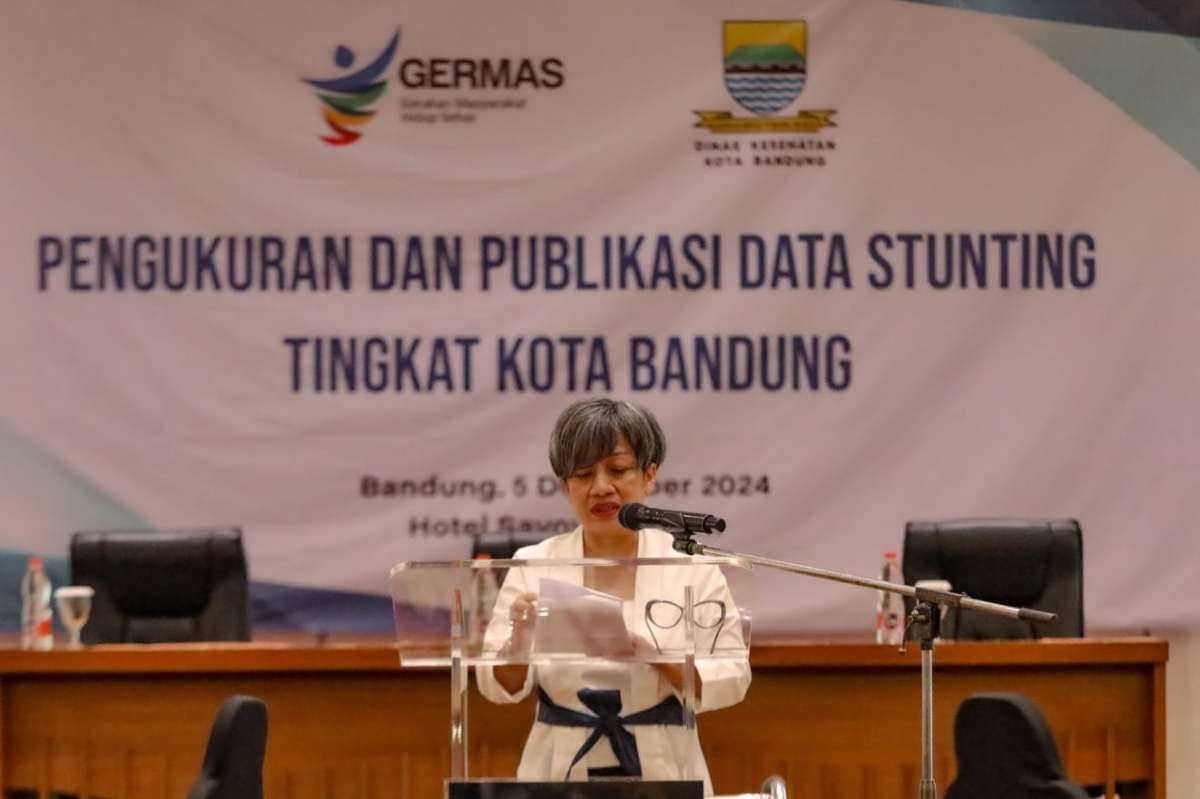
This was stated by the Acting Regional Secretary (Sekda) of Bandung City, Dharmawan, when opening the 2024 Bandung City Level Stunting Data Measurement and Publication at the Savoy Homann Hotel, Wednesday (5/12/2024).
He said, based on toddler weighing data in August 2024, the number of stunted toddlers was recorded at 8,172 children, an increase compared to 6,142 children in 2023.
Although there was an increase, this was recognized as the result of more accurate and intensive measurements carried out at the sub-district and district levels. One of the absolute causes of the increase in stunting data, looking at the D/S data (Number of Toddlers weighed at Posyandu divided by the number of toddlers in the Posyandu work area) which experienced a significant increase from 84.64 percent to 97.74 percent.
In addition, the main factors causing stunting in Bandung City include smoking habits in the family environment, lack of education, and limited access to clean water. Therefore, public education is a priority.
"Posyandu cadres have an important role in routine monitoring and early intervention," he said.
For this reason, in supporting the handling of stunting, the City of Bandung relies on the e-penting digital platform, which integrates data from integrated health posts to health services.
"Accurate data will be the basis for more effective policy-making and intervention," he said.
He emphasized the importance of handling stunting to improve the quality of human resources (HR).
"Healthy and intelligent human resources not only increase regional competitiveness and independence, but also support national development," he said.
He said that stunting must be addressed by solving the root of the problem, such as family welfare, access to clean water, a healthy environment, and family education.
"We are optimistic that Bandung City will one day achieve zero stunting," he said.
He also appreciated all parties who have contributed to efforts to reduce stunting, while hoping that the prevalence of stunting will continue to decline every year.
Secretary of the Bandung City Stunting Reduction Acceleration Team (TPPS) Dewi Kaniasari explained that the main purpose of measuring the publication of stunting data is to monitor children's nutritional status and develop appropriate intervention programs.
"We hope this program will increase public awareness and participation in maintaining children's growth and development," he said.
He said the results of the analysis of toddler measurement data at the sub-district and district levels would be used to prepare an integrated nutrition intervention plan in 2025.
Acting Head of Community Welfare of the Bandung City Health Office, Ni Luh Widyastuti, said that there were 5 sub-districts that experienced a significant decrease in stunting prevalence, namely Cibiru, Bojongloa Kidul, Buah Batu, Bandung Wetan and Sumur Bandung sub-districts.
Meanwhile, there are a number of sub-districts that have also experienced a decrease in the prevalence of stunting, including: Pasteur, Arjuna and Husein, Ledeng, Dago, Tamansari, Babakan Ciamis, Binong, Kacapiring, Burangrang, Cikawao, Lingkar Selatan, Balonggede, Pungkur, Ciateul, Sukaasih Sub-district.
Then, the districts of Karanganyar, situsaeiur, Kebon Lega, Cibaduyut and Cibaduyut Kidul, Babakan Ciparay, Cigondewah Kidul and Cigondewah Rahayu.
 Share News Via
 facebook
 twitter
 whatsapp
 email
email