

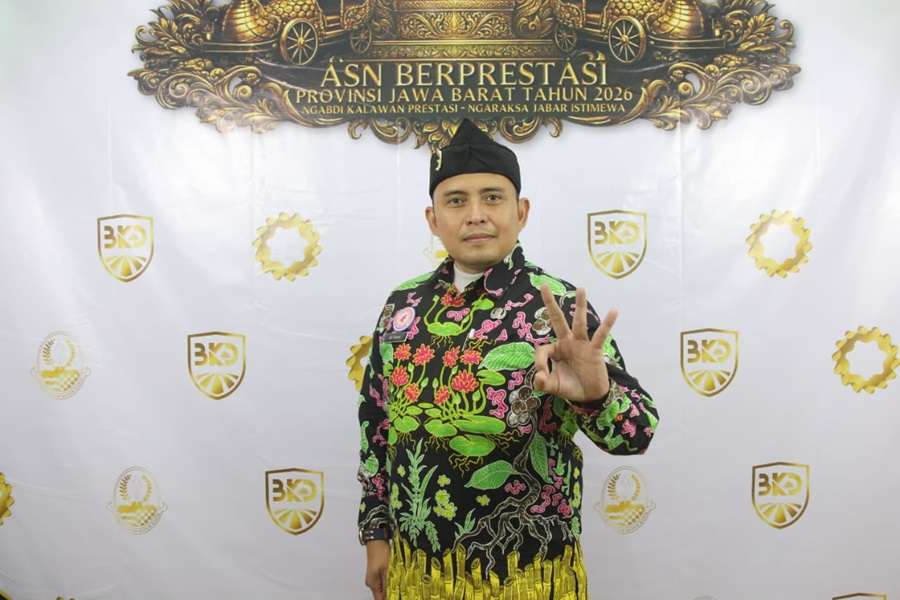
PORTALJABAR, BEKASI REGENCY - The Puspita Sakura innovation developed by the Head of the Sukadami Community Health Center in Bekasi Regency, Dr. H. RM Adi Pranaya, MARS., MKK, has successfully passed Stage 3 of the selection for the Outstanding Civil Servant Award at the West Java Province level. This pentahelix-based innovation is one of the efforts to expand HIV prevention, education, and screening through community and school empowerment, while also supporting the target of Bekasi Regency being HIV-Free by 2030.
"Efforts to address the HIV challenge cannot simply rely on people coming to health facilities. Therefore, services need to be brought closer to people's lives, including through integrated health posts (Posyandu) and schools," said Adi.
Through this innovation, Posyandu cadres are empowered as Puspita Sakura Cadres, while within schools, Puspita Sakura Ambassadors are being developed, involving Adolescent Health Cadres and UKS/M. Both are part of efforts to expand education, communication, screening, and referrals in accordance with applicable service mechanisms.
"Puspita Sakura's main idea is to change the service pattern from a predominantly waiting approach at health facilities to a more proactive approach by empowering community and school networks," he explained.
This innovation was developed to address a number of HIV service issues, ranging from lack of integrated cross-program and sector coordination, low screening coverage, limited community access, suboptimal education, stigma against HIV, to limited resources to expand service coverage.
"Through community and school empowerment, we want to expand HIV awareness and education while improving early detection through screening, including reaching communities that have not previously been connected to services," said Adi.
Puspita Sakura is also equipped with several implementation tools, including standard operating procedures (SOPs), the Puspita Sakura Guidebook, an e-book, the Puspita Sakura Card, and a Google Form-based screening tool. Its development received cross-sector support and involved collaboration with five HIV-affected NGOs and other partners.
"The success of this innovation is not solely measured by awards, but by how far Puspita Sakura is able to expand the reach of prevention, raise awareness, strengthen early screening, and connect communities in need with health services," Adi added.
Going forward, Puspita Sakura is expected to further strengthen collaboration between Community Health Centers (Puskesmas), Integrated Health Posts (Posyandu), schools, village governments, regional apparatus, communities, the business world, and other strategic partners.
"Collaborative efforts must continue to be directed at expanding HIV mitigation efforts and supporting the goal of an HIV-free Bekasi Regency by 2030," he explained. (Bekasi Regency Communications and Information Office/rka)
 Share News Via
 facebook
 twitter
 whatsapp
 email
email