

PORTALJABAR, BANDUNG CITY - The journey to the global market doesn't always begin with large-scale exports. For micro, small, and medium enterprises (MSMEs) in Bandung, this can develop through a long process of developing products, discovering their business character, participating in mentoring, and ultimately taking their local products to the international stage.
This experience was felt by a number of MSMEs in Bandung City who had the opportunity to introduce their products at Mega Halal Bangkok 2026 in Thailand.
For them, the event is not just a place to showcase products, but also an opportunity to test business readiness, read market responses, and build networks with potential partners from various countries.
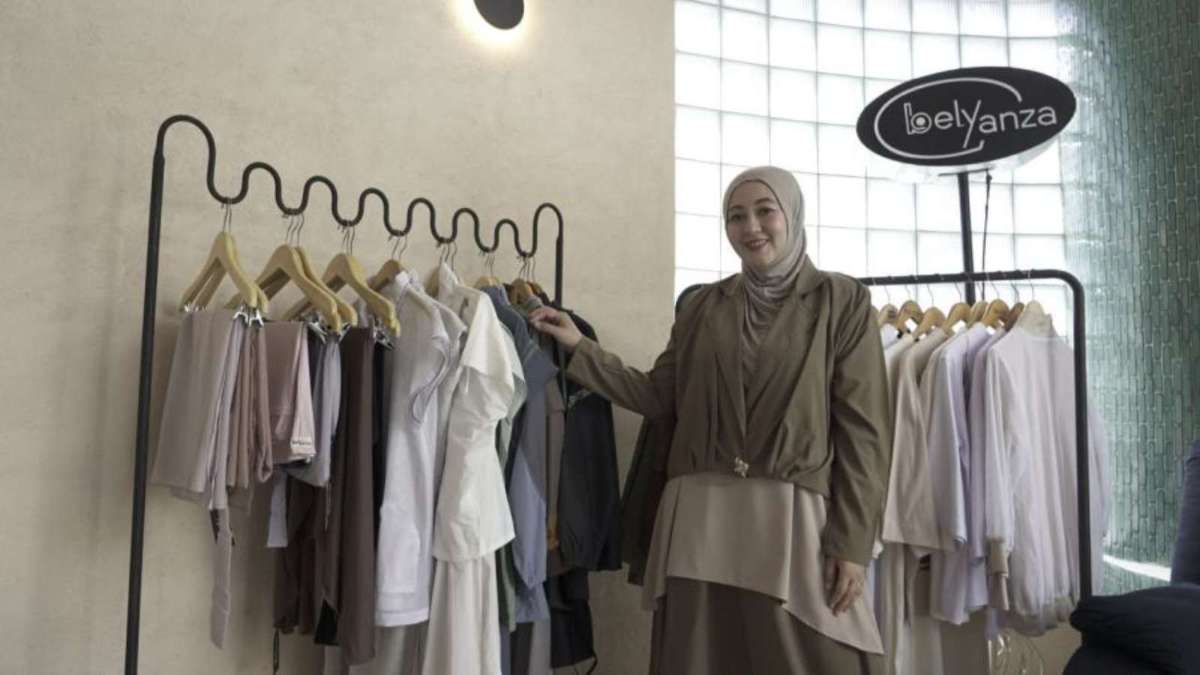
Belyanza's journey to the global market began long before the fashion brand appeared in Bangkok.
CEO and Founder of Belyanza, Nita Belliani Burhan, started her business in 2011. At that time, she was still looking for the right business model and character for the brand, which then officially used the name Belyanza in 2013.
Before building her own brand, Nita used to sell clothes obtained from Tanah Abang and Thamrin City.
However, her interest in fashion made her start experimenting with the clothes she wore herself.
She remakes and mixes and matches thrift clothes to create a look that customers actually prefer.
"For a year I sold other people's clothes, finally I created my own brand," said Nita.
This journey then developed into a long process of discovering Belyanza's DNA. Nita, who previously had a career in the entertainment industry, began studying patterns, cutting, and sewing independently, eventually establishing her own garment factory.
Belyanza then discovered a different character from the fashion that was widely circulating in the market.
Nita chose to develop a street style, edgy, and active style with embroidery and needlework details, while targeting women who want clothes with a strong character without too many feminine ornaments.
"I'm not overly feminine, but I cater to women's needs without too many flowers or polka dots. That's Belyanza," she said.
The journey hasn't always been smooth sailing. One of the biggest challenges came when the Covid-19 pandemic hit. At the time, Belyanza had 16 stores in various regions and was stocking up on raw materials in large quantities to meet demand ahead of Eid.
The pandemic caused demand to stop and material stocks turned into deadstock.
Belyanza then had to adapt to keep the business and workforce running.
One of the steps taken was to produce personal protective equipment (PPE), after receiving input from Nita's family who work in the health sector.
This step keeps the activities of Belyanza's tailors and human resources running amidst the difficult situation.
From that time, Nita saw the importance of adaptability. Belyanza then developed products that better align with active lifestyles and wellness needs.
Innovation is also part of Belyanza's journey. In 2024, Nita began studying artificial intelligence (AI) technology to support her creative process and content production.
She even participated in hands-on learning with a Russian mentor in Bali. She then used the technology to visualize design ideas in greater detail, including the Whisper of the Sea collection, inspired by the serenity of women in the water.
After this long journey, Belyanza is beginning to open its doors to the international market. Mega Halal Bangkok 2026 is one of the platforms that will bring the brand together with buyers and potential partners from various countries.
According to Nita, this experience has had an impact not only in terms of collaboration opportunities, but also trust in the brand.
He said that attending international events is one way to demonstrate that MSME products are also capable of meeting standards in terms of quality, design, and character.
For Belyanza, the journey to the global market is not simply about bringing products overseas. It's a long process of finding identity, maintaining quality, understanding market changes, and continually learning.
From Research
A different story comes from Tsurayaa Tea. This wellness-focused tea brand was born from Sena Oktavianti's curiosity about the potential of West Java's tea commodity.
Tsurayaa Tea founder and tea educator, Sena Oktavianti, previously worked in Jakarta as a tax consultant after working for an oil and gas company. She then moved to Bandung during the pandemic to raise her family.
In Bandung City, Sena began to see the potential of West Javanese commodities which he said had not been widely processed into value-added products.
Her interest in tea began when she and her husband visited a tea plantation.
At that time, Sena, who was not used to drinking tea, actually had a different experience when he tried the tea given by the farmer.
Out of curiosity, Sena began researching and studying tea in 2020. He attended tea education and certification courses, eventually gaining a deeper understanding that a single tea plant can produce various types of tea with distinct characteristics.
This knowledge then led him to delve into tea blending by combining tea with flowers, fruits and spices.
The Tsurayaa concept then shifted to wellness. Sena saw tea not just as a beverage, but also as part of a lifestyle and a more serene experience.
After several years of research, Tsurayaa Tea was officially launched in 2024.
Sena then developed various variants, each with its own character and story. From an initial 10 variants, Tsurayaa eventually had up to 40 before finally curating it to 22 products.
To develop raw materials, Tsurayaa also collaborates with farmers in West Java. Single-origin products such as white tea, green tea, red tea, and yellow tea are processed from ingredients curated on the farms, while blending and packaging are carried out at Tsurayaa's production site.
One of the characteristics that Tsurayaa emphasizes is the use of natural ingredients. For tea blending products, Tsurayaa uses flowers, fruit and spices without using essence.
The journey to Mega Halal Bangkok then came through a process of mentoring and networking with various parties. Sena said she had participated in various trainings and curation sessions that helped Tsurayaa prepare to enter a wider market.
During this process, those familiar with Tsurayaa products recommended it to participate in Mega Halal Bangkok 2026.
After going through the process of visiting and seeing firsthand the products and how Tsurayaa is presented, the opportunity to participate in this international event finally opened up.
For Sena, this opportunity was an important experience to introduce Indonesian tea and see the potential of the international market.
In Bangkok, Tsurayaa brought nine product variants. Several products caught the attention of visitors, including tea blends like Hazelnut Dream Tea.
Beyond the product, the presentation is also part of the Tsurayaa experience. The team demonstrates the brewing process live so visitors can understand how to enjoy tea with its distinct characteristics.
Sena said the experience further strengthened his belief that Indonesian tea products have the potential to become more widely known.
Global Network
The Bangkok experience then provided a new opportunity for Bandung's MSMEs to build international networks. Astria Nurul Andari, International Business Development Representative for Tsurayaa Tea, said that participating in Mega Halal Bangkok introduced Tsurayaa to potential partners from several countries.
According to him, a number of visitors came not only to try the products, but also showed interest in bringing Tsurayaa products to their businesses.
Potential partners from Thailand and Malaysia, who own cafes and are interested in exploring collaborations, also developed networks with other business owners attending the event.
"In terms of links, honestly, I've already got a lot," said Astria.
For Astria, this experience demonstrates the importance of MSMEs building relationships and understanding their own products before entering a wider market.
He also encouraged MSMEs to take advantage of various available training and facilities, including government coaching programs.
According to him, a strong product still needs to be supported by the ability to build networks in order to find market opportunities.
Meanwhile, Sena hopes that support for MSMEs will not stop at coaching, but also continue with promotion and opening up access to international markets.
He believes that local products, including Indonesian tea, have great potential to compete if they receive consistent promotional support.
The experiences of Belyanza and Tsurayaa demonstrate that the path to the global market is not an instant journey. There's a long process behind every product, from finding its identity, developing quality, adapting to changing times, to building a network.
From Bandung, the journey has now begun to take on a broader stage. Mega Halal Bangkok 2026 is a crucial stop on that journey. It's not a final destination, but rather part of Bandung's MSMEs' ongoing efforts to introduce local products to the global market.
(Bandung City Communications and Information Service/rka)
 Share News Via
 facebook
 twitter
 whatsapp
 email
email