

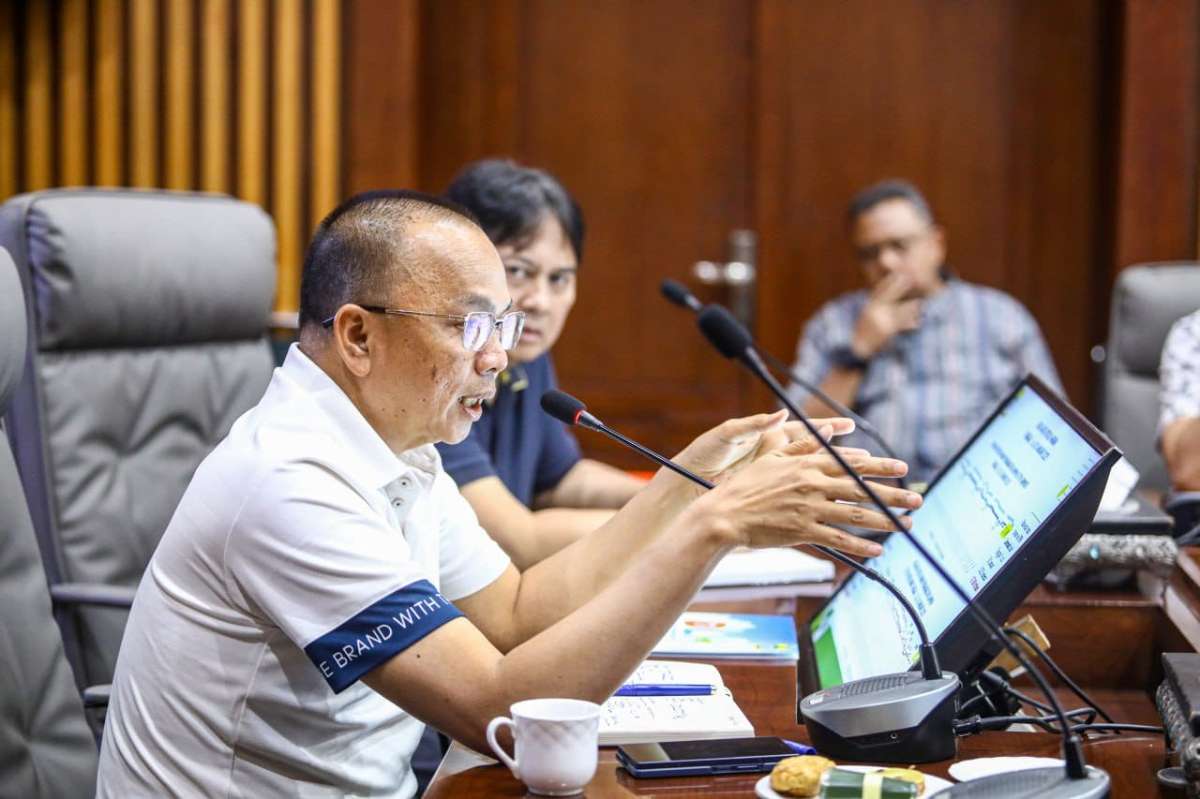
PORTALJABAR, BANDUNG CITY - The Bandung City Regional Government (Pemda) continues to seek the best solution in waste management. In the Integrated Waste Management Task Force meeting, Acting Mayor of Bandung A. Koswara emphasized that waste disposal must be a top priority.
In the meeting, the Bandung City Government also prepared a number of strategic steps to optimize the waste management system, including:
1. Optimization of Motah (Waste Disposal Tool)
The use of motah as a waste disposal tool will be maximized. Currently, there are six Motah units owned by BBWS that can be operated, as well as several others available in the Bandung City Government environment.
"We must maximize all available resources to solve the waste problem, especially in terms of waste disposal," said Koswara.
2. Empowerment of Waste Banks
In addition to waste disposal, the role of waste banks will also be more optimal. Currently, Bandung City has around 300 waste banks, but a more effective system is needed so that waste sorting can be done from the source.
Koswara encouraged the ranks of the Bandung City Government to create a waste bank scheme to implement a door-to-door system to make it easier for the public to sort waste.
"With a more systematic work pattern, it is hoped that the amount of waste that must be disposed of at the final disposal site (TPA) can be reduced significantly," said Koswara.
3. Collaboration with Waste Processing Vendors
The Bandung City Government is also trying to realize cooperation with waste processing vendors to find long-term solutions in managing city waste. With the presence of vendors who have final processing technology, it is hoped that the waste problem can be handled more efficiently and environmentally friendly.
In the meeting, the Head of the Bandung City Environmental Service (DLH), Dudi Prayudi explained that optimization efforts were also carried out in the transportation sector and the use of Integrated Waste Processing Facilities (TPST).
Currently, the city of Bandung is still facing a transportation burden of 154 trips per day, with a shortfall of 14 trips that must be completed immediately from the target quota of 140 trips to the Sarimukti TPA.
As a solution, the Bandung City Government will utilize the quota savings from December and January, which reached 377 trips. With this mechanism, the Bandung City Government can still transport waste to the Sarimukti TPA with a scheme of 140 trips plus 13 trips per day during February.
In addition, Dudi said several TPSTs are also being optimized. Among others:
- Nyengseret & Tegallega TPST: estimated processing of 6 rits per day.
- Batununggal TPST: estimated processing of 1 trip per day.
- Cicukang Holis TPST: estimated processing of 6 trips per day.
"It needs to be conveyed, the pyrolysis machine at TPST Cicukang Holis is also in the accelerated operation stage. This machine can process 10 cubic meters of waste per hour, or around 9 trips in 10 working hours. The target is for this tool to be operational in early March," explained Dudi.
With these various steps, the Bandung City Government hopes that the waste problem can be handled more effectively and sustainably, without having to continue to rely on waste disposal outside the Bandung City area. (Bandung City Communication and Information Service/Revo)
 Share News Via
 facebook
 twitter
 whatsapp
 email
email