

PORTALJABAR, BANDUNG CITY - Patients in West Java no longer have to go through a tiered referral system at healthcare facilities when requiring further treatment. The West Java Provincial Government is promoting a new referral system that allows patients to be directed directly to hospitals based on their illness and required service capabilities.
The scheme is currently being piloted in Bandung City through the implementation of Service Capacity-Based Referrals (RBKP), along with reforms to the Standard Inpatient Class (KRIS) and the Indonesian Diagnosis Related Group (iDRG).
West Java Deputy Governor Erwan Setiawan believes that changing the referral system is crucial because delays in determining a health facility can risk worsening a patient's condition.
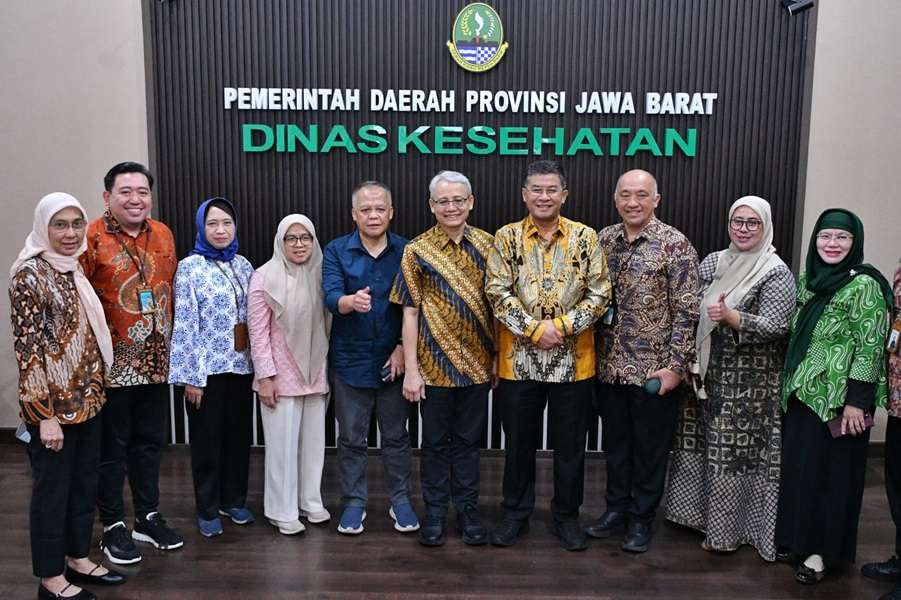
"Until now, people have had difficulty coming to the Community Health Center (Puskesmas). They have nowhere to go, and the patient gets worse and can't be saved. But now, they can be referred directly based on their ability and the specific condition," Erwan said after attending the visit of the Secretary General of the Ministry of Health to the West Java Health Office in Bandung City on Friday (September 25, 2026).
With RBKP, patients are no longer directed solely based on hospital class. If a patient requires cardiac treatment, for example, they are referred to a hospital that offers cardiac services tailored to their needs. Similarly, patients with cancer are directed to facilities that specialize in cancer treatment.
"If it's cancer, go straight to a hospital that handles cancer, if it's heart disease, go to a hospital that handles heart disease," said Erwan.
Erwan requested that the trial in Bandung not remain a pilot project. The West Java Provincial Government aims to expand the system to other regencies/cities, reaching all 1,018 community health centers (Puskesmas) in West Java.
In fact, Erwan pushed for the evaluation in Bandung to be conducted sooner than the planned 12-month trial period. He believes the city's healthcare connectivity is a key factor in accelerating the system's implementation.
"This is a 12-month trial, but we're targeting three months, because this is a big city and we're already connected to each other. I think Bandung City can do it in three months," he said.
Meanwhile, the Secretary General of the Ministry of Health, Kunta Wibawa Dasa Nugraha, stated that Bandung was one of four regions selected to pilot the health insurance system reform. The other three regions were Makassar City, Tulungagung Regency, and Muara Enim Regency.
Kunta explained that referrals have previously been conducted in stages. In the new system, service capacity is the basis for determining the destination hospital, allowing patients to receive more appropriate treatment without having to go through all levels of care.
"If my heart condition is complicated, I go straight to a hospital with primary cardiac services. This way, people can receive better care immediately, without having to wait in lines," he said.
Reforms don't stop at the referral system. The Ministry of Health is also preparing the KRIS (National Inpatient Hospital System) with 12 criteria for inpatient rooms, including the availability of oxygen and ventilators, indoor bathrooms, and a limit of four beds per room.
Meanwhile, iDRG will be part of the BPJS Kesehatan tariff and claims system reform to ensure that service costs are more aligned with the type of illness and the actual cost of hospital services.
Kunta confirmed that the trial in Bandung will cover the entire city and involve both government and private healthcare facilities, including community health centers (Puskesmas) and clinics. After a 12-month trial and evaluation period, the system is planned to become part of a nationwide rollout.
"We will implement it. The Presidential Decree will be refined. God willing, once it has been enacted, we will immediately conduct trials in the four cities," he said.
For West Java, Bandung is now the entry point for testing a fundamental change: patients are no longer simply searching for available hospitals but are instead directed from the outset to facilities capable of treating their illnesses. If the trial goes according to plan, the West Java Provincial Government will encourage the system's expansion to other regions.
 Share News Via
 facebook
 twitter
 whatsapp
 email
email