

PORTALJABAR, BANDUNG CITY - Infrastructure improvements in Bandung City have continued gradually over the past year, focusing on road maintenance, sidewalk improvements, and flooding management in several areas. These efforts are beginning to show results, although further intervention is needed in some areas to ensure a more equitable impact.
The Teropong Daerah survey by Kompas Research and Development (Litbang Kompas) from February 23 to March 3, 2026, recorded public satisfaction with the infrastructure sector at 80.8 percent. This figure indicates that improvements are beginning to be felt by the public, although several aspects remain of concern in the field.
Accordingly, data from the Bandung City Water Resources and Highways Agency (DSDABM) shows that the road condition level in 2025 reached 92.78 percent of the total 984.4 kilometers of roads surveyed. Approximately 913.4 kilometers of roads are in good condition, while the remainder still requires further maintenance at several priority points.
Maintenance efforts include routine maintenance on 137.44 kilometers, periodic maintenance on 37.23 kilometers, and road rehabilitation on 14.34 kilometers. This approach focuses on maintaining road condition while preventing further damage.
Improvements are also being made to pedestrian spaces. By the end of 2025, the percentage of inclusive sidewalks will reach 66.87 percent, with a total length of approximately 217.5 kilometers. This improvement is being achieved through the construction, rehabilitation, and maintenance of sidewalks to ensure they are safer and more comfortable for the public to use.
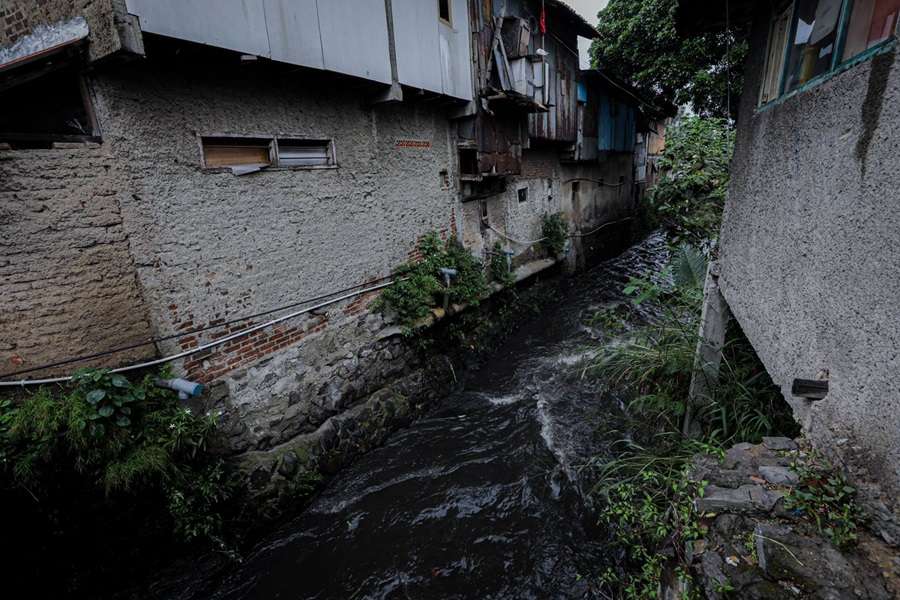
In terms of drainage, flood management has shown gradual progress. Of the 68 flooding points used as measurement indicators, 61 have been addressed, while seven others are still underway, particularly in areas with more complex drainage systems and high traffic density.
To support this, various interventions have been implemented, including the construction of retention ponds and pump houses, the normalization of a 14.33-kilometer river, and the construction and rehabilitation of urban drainage systems. These efforts are being implemented in stages, adapting to the existing network conditions on the ground.
The Head of the Bandung City Water Resources and Highways Agency, Rizki Kusrulyadi, said that the main focus now is to ensure that existing infrastructure can function optimally before undertaking further development.
"Our current focus is on maintaining and addressing priority areas directly impacted by the public. Therefore, we are ensuring that roads, sidewalks, and drainage systems remain in good working order through gradual repairs," he said.
He added that handling flooding and road quality remains a major concern.
"Some areas have shown improvement, but others are still under treatment. This is our priority so that the impact can be felt more evenly by the community," he added.
Bandung Mayor Muhammad Farhan emphasized that the city government understands the high level of public concern regarding the condition of infrastructure in Bandung City.
"We understand that infrastructure issues, from road quality and sidewalks to flooding, remain a concern for residents. At the same time, various improvements are underway and beginning to be felt, although they are not yet fully distributed," said Farhan.
He added that 2026 will focus on accelerating improvements in this sector.
"Therefore, in 2026, we will focus more on infrastructure improvements, especially in areas that have received the most complaints. We want to ensure that the improvements are more targeted and have a direct impact on residents," he continued.
According to him, infrastructure improvements require a consistent and sustainable process.
"This isn't a job that can be completed overnight. But we're ensuring the repair process is underway and will continue to accelerate it so the quality of the city's infrastructure improves over time," Farhan concluded. (Bandung City Communications and Information Office/rka)
 Share News Via
 facebook
 twitter
 whatsapp
 email
email