

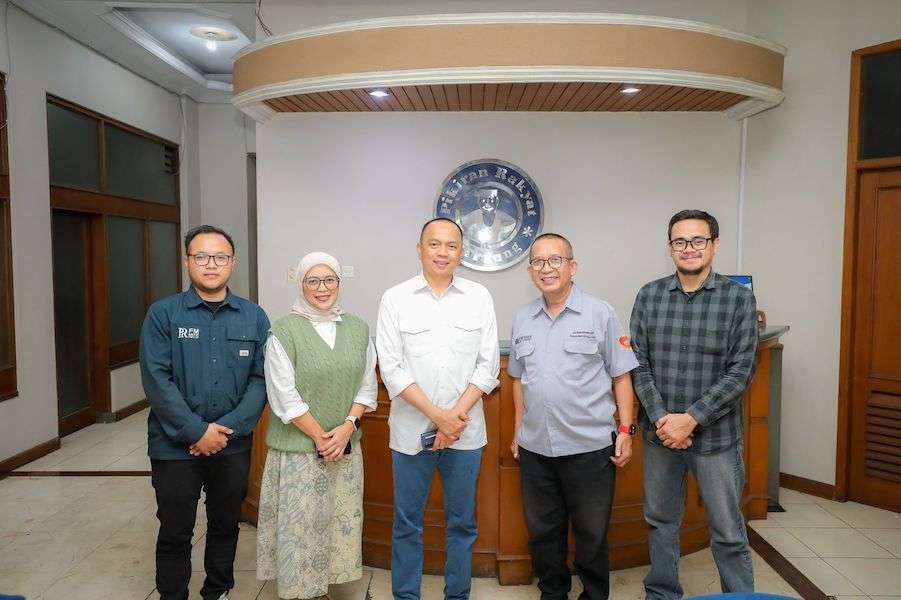
PORTALJABAR, BANDUNG CITY - Acting Mayor of Bandung A. Koswara reiterated that upstream waste management has a key role in overcoming the waste problem in Bandung City.
This was conveyed in line with the efforts of the City Government (Pemkot) which continues to focus on reducing waste sent to the Sarimukti Final Disposal Site (TPA), while at the same time strengthening public awareness of the importance of waste management from its source.
According to data as of October 4, 2024, waste generation in Bandung City reached 1,796.51 tons per day, with 993 tons transported to the Sarimukti TPA.
Through various waste management initiatives, such as processing clustering, building maggot houses, and implementing new habits, the government is targeting to reduce the number of waste deliveries from 172 trips per day to 140 trips by the end of November.
"Bandung City Government has committed to handling waste from upstream to downstream. Starting from waste sorting in households, to management at TPS. This is not only the government's task, but a shared responsibility," said Koswara on Jalan Asia Afrika, Wednesday (10/23/2024)
As many as 383 Waste-Free Areas (KBS) have been formed in Bandung as of September 2024, with 589 maggot houses spread across various sub-districts. This step is expected to reduce the volume of waste entering the landfill, while also encouraging independent waste management in the community.
In addition, Koswara emphasized, waste management in traditional markets also continues to be optimized. From 37 markets in Bandung, around 54 tons of waste are produced every day.
The Bandung City Government is trying to ensure that 70 percent of market waste is processed directly on site, so that only 30 percent of residual waste is sent to the Sarimukti TPA.
"Waste management upstream is very important, and we all have a role in it. This is not just the government's job, but requires the active participation of every citizen to protect our environment," he said.
These steps are not only the responsibility of the government, but also involve the community directly. Thus, this joint effort is expected to reduce the burden on landfills and strengthen the culture of sustainable waste management in the city of Bandung.
 Share News Via
 facebook
 twitter
 whatsapp
 email
email