

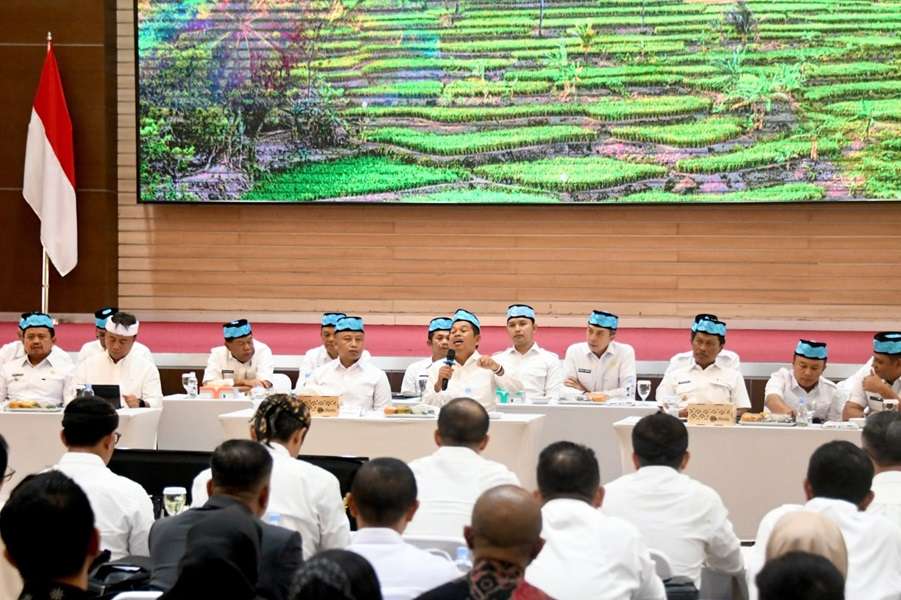
PORTALJABAR, DEPOK CITY - Sixty-five Regional Public Hospitals (RSUD) across West Java, along with several central government and private hospitals, have agreed to collaborate to strengthen the public health protection system. This collaboration will allow the public easier access to hospital services.
For example, even when outside their administrative area, people can still access healthcare services. This way, people in need of services don't face obstacles simply because they're outside their home region.
In addition, with this policy, West Java residents can still access health services when facing financial issues, including BPJS Health membership.
West Java Governor Dedi Mulyadi said the government should not allow citizens to be left in difficult situations simply because of administrative issues or limited ability to pay for medical expenses.
"The state must be present when people experience difficulties. We must not let our people be in difficult situations, while it is as if we don't know," said Dedi Mulyadi
during the signing of the Service Cooperation Agreement with regional, central and private hospitals at the Depok Mayor's Office, Wednesday (7/10/2026).
Meanwhile, the central government hospitals that are also being collaborated include the Gatot Subroto Army Central Hospital, Dr. Hasan Sadikin General Hospital, Bandung, and Dr. Cipto Mangunkusumo National General Hospital.
In addition, the collaboration also involves a number of central government referral hospitals with specialized services, namely Harapan Kita Heart and Blood Vessel Hospital, Harapan Kita Children's and Mothers Hospital, Dharmais Cancer Hospital, Cicendo Eye Hospital, Prof. Dr. Sulianti Saroso Infectious Disease Hospital, Dr. H. Marzoeki Mahdi Mental Hospital, Dr. M. Goenawan Partowidigdo Lung Hospital, and Dr. HA Rotinsulu Lung Hospital.
Meanwhile, from the private and non-governmental hospital elements, the collaboration involves Santosa Hospital Bandung Central, Santosa Hospital Bandung Kopo, and Mrs. RA Habibie Kidney Specialist Hospital.
Dedi Mulyadi, known as KDM, emphasized that this policy also changes the government's approach to addressing community issues. Previously, he noted, various cases that arose within the community often only received a response after they reached him directly. This approach cannot be applied to all West Java residents.
Therefore, he requested that district/city governments develop a monitoring system capable of detecting citizen issues early, including utilizing information from the public and social media. This way, emerging health issues can be addressed promptly without having to wait for residents to seek the governor's attention directly.
 Share News Via
 facebook
 twitter
 whatsapp
 email
email