

PORTALJABAR, BANDUNG CITY - Many people are participating in various activities to commemorate Indonesian Independence Day, which falls on August 17th. Among the many activities, one that attracts attention is tracing the footsteps of the fighters who fought for Indonesia's independence.
West Java boasts numerous historic buildings that could be a great way to commemorate Indonesia's independence. Here are some potential destinations:
1. Indonesia Sues Building
The Indonesia Menggugat Building is one of Bandung's historic buildings. It bears silent witness to the struggle for Indonesian independence.
In 1930, Sukarno (the first president of the Republic of Indonesia) was tried by the Dutch East Indies government in this building, formerly known as the Bandung Landraad Building. During the trial, Sukarno delivered a plea, or defense, which later became known as "Indonesia Accuses."
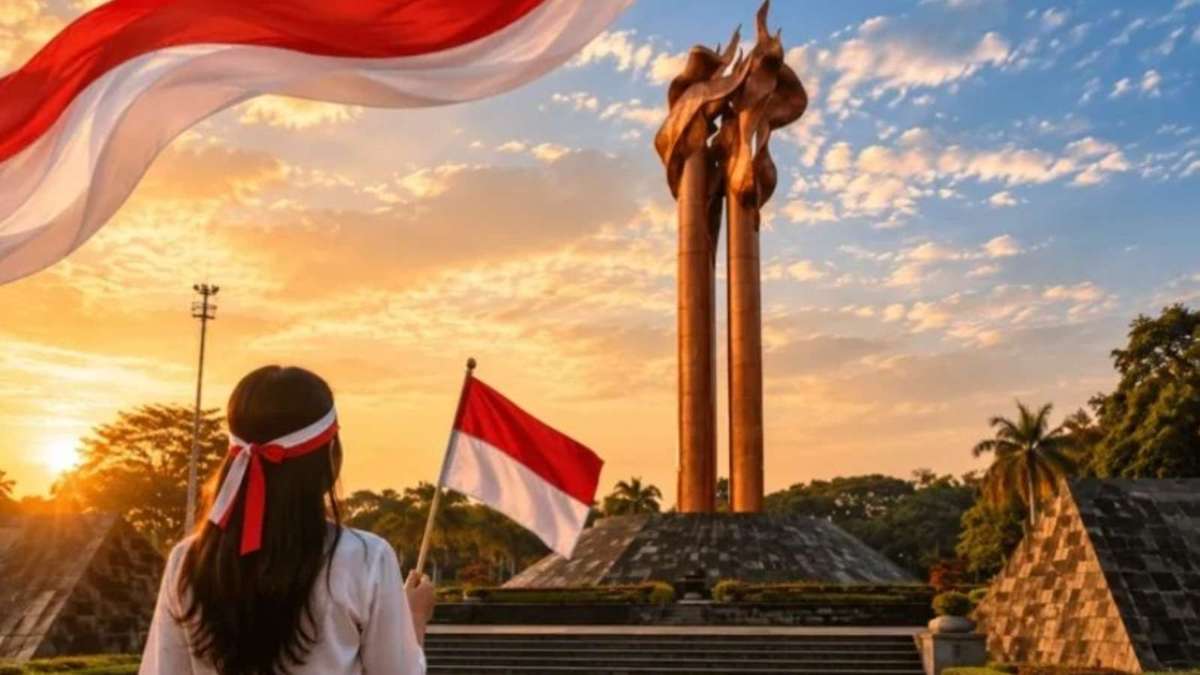
2. Bandung Sea of Fire Monument
This 45-meter-tall monument was erected to commemorate the momentous event "Bandung Sea of Fire." In 1946, Bandung's freedom fighters and residents worked together to clear their homes and raz them to the ground to prevent Allied and Dutch forces (NICA) from occupying them, who intended to regain control of Indonesia.
This memorial was built in the 1980s. One of its most recognizable features is its towering shape, with a peak resembling a flame.
3. Rengasdengklok House
Located in Karawang Regency, this house bears silent witness to the moments leading up to Indonesian independence. Here, Sukarno and Mohammad Hatta (the first vice president of the Republic of Indonesia) discussed plans and drafted the proclamation text.
Before becoming a historic site, the house was inhabited by a Chinese man named Djiaw Kie Siong. When Soekarno and Hatta were brought to Rengasdengklok, the house served as a resting place and a place to hold discussions with the youth group.
4. West Java People's Struggle Monument
The West Java People's Struggle Monument (Monpera Jabar) is a historical landmark in Bandung. It was erected to commemorate the struggle of the West Javanese people to seize, defend, and contribute to the independence of the Republic of Indonesia.
Today, the monument serves not only as a memorial but also houses a history museum, educational space, an auditorium, and various other public facilities. Currently, it is managed by the West Java Provincial Tourism and Culture Office through the West Java Regional Cultural Management Technical Implementation Unit (PKDJB).
5. Struggle Building 45
The Juang 45 Building is located at Jalan Sultan Hasanudin No. 39, Tambun Selatan District, Bekasi Regency. It houses a variety of important collections, including prehistoric relics, relics from the Tarumanegara Kingdom, Dutch colonial relics, and relics from the Japanese occupation.
Originally known as Landhuis Tamboen, this building was built by Khouw Tjeng Kie, a landowner of Chinese descent. The building's function was related to the management of the Khouw family's land and plantations.
6. PETA Museum & Monument
This building in Bogor City chronicles the formation of the Homeland Defense Army (PETA) during the Japanese occupation. It houses a number of historical collections, including military equipment, clothing and paraphernalia, weapons, and important documents.
The building complex was actually built in the 18th century, around 1743–1745. Initially, it served as a residence for the guards and staff of the Governor-General of the Dutch East Indies. However, the Japanese converted it into a PETA (Indonesian Army) training center.
7. Dutch Cave and Japanese Cave
In West Java, there are several caves left by the Dutch and Japanese armies. These caves are not natural cavities, but rather purpose-built structures for various purposes, such as water channels, protective bunkers, or weapons storage.
One of the caves left behind by the Dutch and Japanese is located in the Bandung Forest Park (Tahura). The Dutch built this cave for various purposes, including as a tunnel to tap or divert water from the Cikapundung River. The tunnel was also used for strategic and military purposes.
8. Banceuy Prison
Banceuy Prison was built by the Dutch East Indies government in the late 19th century to house a variety of groups, from criminals to political prisoners.
In 1929, Sukarno was imprisoned here to limit his nationalist movement activities with his colleagues from the Indonesian National Party (PNI). His cell was very small, measuring only 1.5 x 2.5 meters.
Today, Sukarno's former cell is one of the main preserved sections of the Banceuy historic site. It houses several replicas of objects and information about Sukarno's imprisonment.
(Rep pun/bhf)
 Share News Via
 facebook
 twitter
 whatsapp
 email
email