

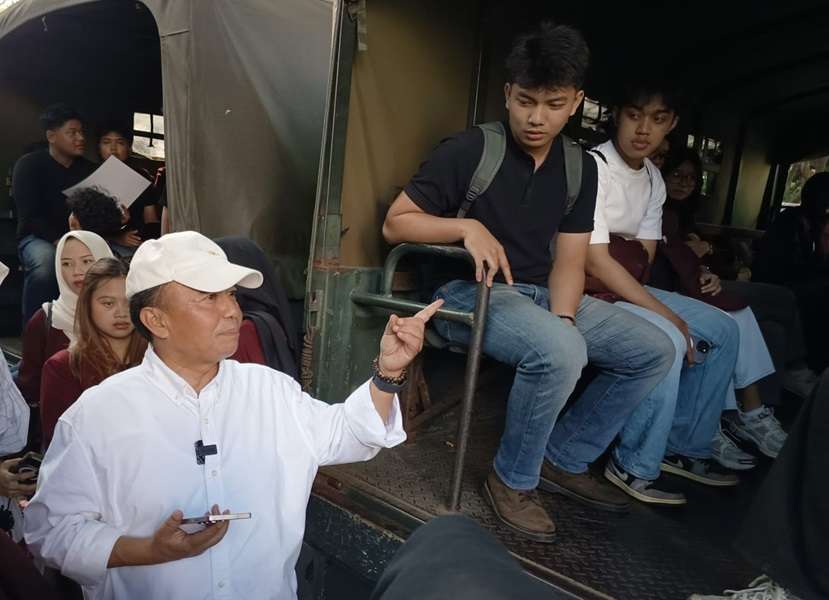
PORTALJABAR, BANDUNG REGENCY - West Java Regional Secretary Herman Suryatman released 3,000 Telkom University students who will carry out Thematic Community Service Program (KKN) at the Telkom University campus, Saturday (24/10/2026).
The KKN program's theme is waste management within the framework of the Gotong Royong Akademisi Berkolaborasi dan Berinasi (Gradasi) program. They will conduct KKN in several areas in Bandung Regency.
Regional Secretary Herman said that the Thematic Community Service Program on waste management requires students to begin to understand the dynamics of problems in society.
"The theme we're carrying is waste management, and of course, it's not just about learning, but also about how to begin to understand the dynamics of the problems around us," said Herman.
The main goal of this Thematic Community Service Program is to educate the public on reducing, utilizing, and recycling waste. Herman stated that addressing the waste problem requires a collaborative effort between the government, the community, and universities.
"We believe that the government, the community, and universities must work together to address this waste issue, with the primary goal being to educate the public to reduce, utilize, and recycle waste," he explained.
Moreover, Herman continued, higher education has three functions in the Tri Dharma, one of which is community service.
"So, what you will be doing is part of the Tri Dharma of Higher Education, so we will go into the field together to provide education," said Herman.
On that occasion, Herman stated that Greater Bandung is currently facing a waste problem. Every day, Greater Bandung produces 5,000 tons of waste, but only 30 percent is managed.
"Every day, there are 5,000 tons of waste in Greater Bandung, and only 30 percent of it is managed. This can actually be managed at home by reducing, utilizing, and recycling waste," he concluded.
 Share News Via
 facebook
 twitter
 whatsapp
 email