

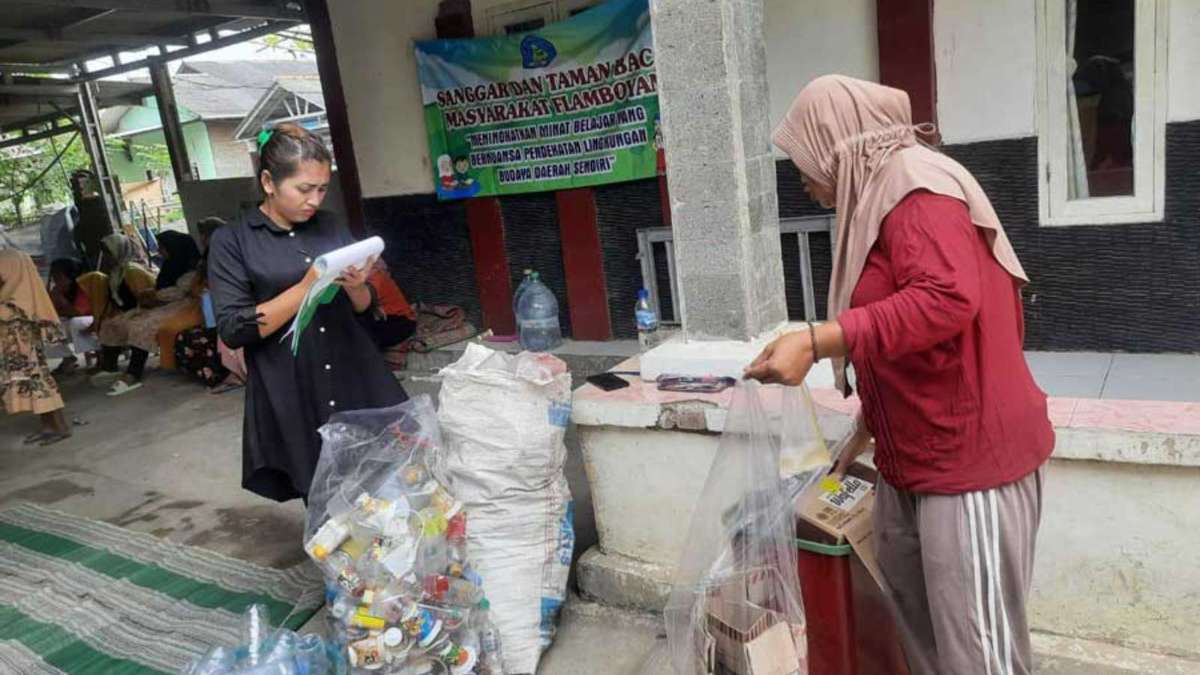
PORTALJABAR, BEKASI REGENCY - The Bekasi Regency Government has built 556 waste banks to reduce waste generation and increase community income through the management of waste with economic value (23/7/2026).
This number makes Bekasi Regency the region with the most waste banks in Indonesia until April 2026.
Head of the Bekasi Regency Environmental Service, Syafri Doni Sirait, said the government is targeting each RW to have one waste bank.
"Our target is to have one waste bank per neighborhood unit (RW). Currently, there are only 556 units, while the number of RWs in Bekasi Regency is around 3,000. This means there is still significant room for further development," said Syafri Doni.
He explained that the success of the program was driven by increasing public awareness that waste has economic value.
The Bekasi Regency Environmental Service provided training to RW administrators so that they could educate residents about waste sorting from home.
"People used to think collecting trash was a useless chore. After doing it for one or two years, it turned out that the results could provide additional income. That's when people's mindsets began to change," he said.
According to Syafri, plastic, paper, glass, and even used cooking oil now have a selling value, thus increasing people's income while reducing environmental pollution.
The Bekasi Regency Government also collaborates with recycling companies to absorb waste sorting results from all waste banks.
In the future, the regional government is targeting every village to have a Main Waste Bank that functions as a place for processing Reduce, Reuse, Recycle waste.
"We are working to ensure that the development of the Main Waste Bank is funded not entirely by the regional budget (APBD), but through collaboration with village governments, village-owned enterprises (BUMDes), and the private sector," he said.
The Bekasi Regency Government hopes that more residents will sort their waste at home so that the volume of waste entering the Burangkeng Final Disposal Site continues to decrease.
(Bekasi Regency Communications, Information and Sanitation Service/bhf)
 Share News Via
 facebook
 twitter
 whatsapp
 email
email