

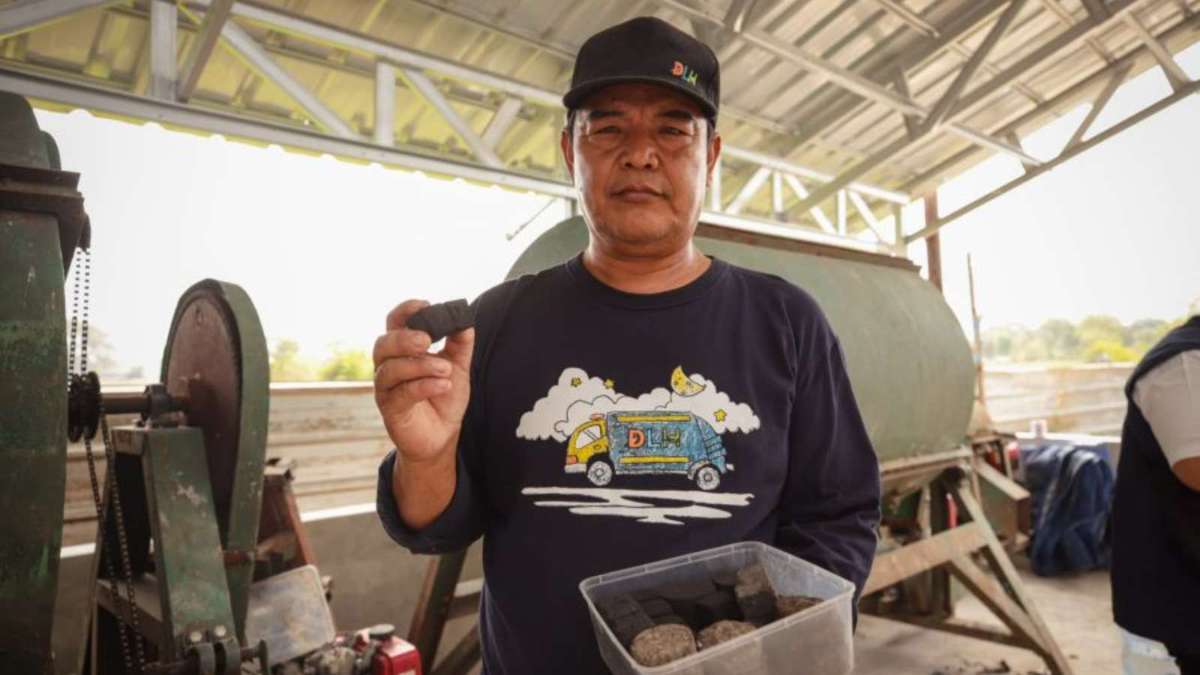
PORTALJABAR, BANDUNG CITY - Organic waste processing at the Gedebage Temporary Waste Processing Site (TPSS) in Bandung City continues to be strengthened through the development of composting facilities. In addition to relying on the open windrow method, the TPSS is now preparing to reuse several rotary composters after the construction of the Rotary Building.
Nandang Jumara, Composting Supervisor at the Gedebage Landfill Site (TPSS), stated that not all organic waste can be processed using maggots. Garden waste, leaves, twigs, and even larger organic materials still require composting.
"Not all organic matter can be reduced by maggots. Things like leaves, banana leaves, and plants must go through the composting process," Nandang said when met at the Gedebage TPSS on Wednesday (August 19, 2026).
Currently, the composting process at the Gedebage TPSS relies on the open windrow method, considered the most effective for processing large amounts of organic waste.
In addition to the open windrow, the facility also has a rotary machine that previously could not be utilized optimally.
Nandang explained that the previous problem arose because the foundation where the machine was located wasn't strong enough. When the machine was used under load, the bottom part sank, causing the machine's mountings to shift.
The facility has now been repaired by the Environmental Agency (DLH), including reinforcing and concreting the floor. With these repairs, the rotary machine is expected to be operational again once the facility handover process is complete.
"Once the handover has been completed, I'll probably put it into operation. I'll use whatever the government has purchased for its intended purpose," he said.
There are five rotary units at the Gedebage TPSS. Each has a stated capacity of approximately 1,000 liters. However, based on operational experience, the ideal capacity per unit is around 250 liters for optimal process operation.
With these five units, the rotary facility is expected to help reduce the pile of organic material at the Gedebage TPSS, along with processing using the open windrow and dem composter methods.
Under normal conditions, the composting process at the Gedebage TPSS is capable of processing around one to two tons of organic waste per day, depending on the amount of incoming waste.
Nandang said that the volume of organic waste that had to be handled at the location had reached around 150 cubic meters.
For compost results, utilization is carried out through collaboration with various parties, especially government agencies and groups that require large quantities of compost.
The compost can be used for green open spaces, gardens, and agricultural activities, among other purposes. The Gedebage TPSS also offers opportunities for farmers who need compost for research or direct use.
"Usually the off-takers are the same agencies or those with large volumes," he said.
Interestingly, the benefits of organic processing at the Gedebage TPSS are also felt by farmers around the location.
Nandang explained that the compost produced in the area had been carried away by floodwaters and into the rice fields. After harvest, farmers saw an increase in yields, and they began utilizing the compost and compost from the Gedebage TPSS.
According to him, this condition shows that products resulting from processing organic waste can again provide benefits to the ecosystem and society.
In addition to composting, the Gedebage Waste Management Site (TPSS) is also developing leaf waste utilization through a carbonization process. Dried leaf waste can be processed into charcoal, which has the potential to be used as fuel, including for barbecues.
"This is one of them. Waste can't be resolved with one method. We carbonize garden waste and dry leaves into charcoal," he said.
Nandang hopes that strengthening the composting facilities will increase processing capacity and reduce the pile of organic waste entering the Gedebage TPSS.
One of the supporting facilities deemed essential is a roofed building for the composting area. Previously, the composting process was significantly disrupted by rain, preventing production from operating optimally.
With a roofed building and better facility systems, the composting process is expected to take place more consistently throughout the year.
"Previously, without a roof, we couldn't produce when it rained. Now, with a roof, we can produce non-stop. Whether it's the rainy season or the dry season, we can produce," he said.
He hopes that all new facilities, including the rotary and other supporting facilities, can be used optimally soon.
(Bandung City Communications and Information Service/rka)
 Share News Via
 facebook
 twitter
 whatsapp
 email
email