

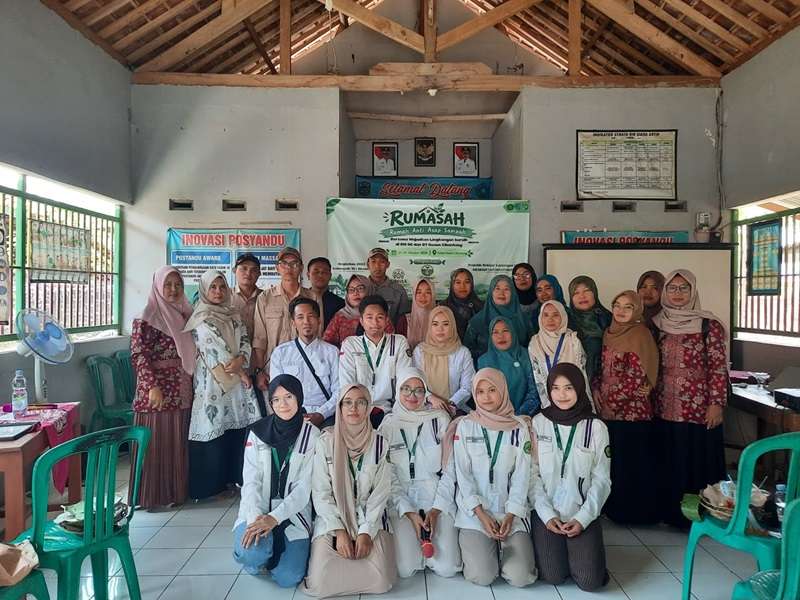
PORTALJABAR, BANJAR CITY - Siliwangi University students launched the Anti-Garbage Smoke House (RUMASAH) program in Mekarharja Village, Banjar City, to reduce garbage burning and the risk of respiratory problems.
The program, which took place from October 21–24, 2026, targeted residents of Cibentang Hamlet through education on waste sorting, biopore creation, and the reactivation of waste banks.
RUMASAH was initiated by Field Based Learning (PBL) students from Group 19 AKSARA (Joint Community Action) based on a community diagnosis with the local village government.
Smoke from burning waste contains particles that can irritate the respiratory tract and worsen Acute Respiratory Tract Infections (ARI), so waste management is a major concern.
Household Waste Sorting Education
The launch activity took place at Posyandu Cibentang 1, RW 07, RT 15, Mekarharja Village, Wednesday (21/10/2026), with the introduction of three intervention programs.
The SIRKULA (Citizen Synergy in Sustainable Waste Management) program educates residents to sort organic, inorganic, and residual waste through discussions and educational games.
Students also conducted pre- and post-education tests to help evaluate participants' understanding of household waste management.
Biopores Reduce Organic Waste
Through the Smart Biopore Community Movement (GEMPAR BIOPORI), students together with residents made seven biopore holes in seven RTs in the RW 006 and RW 007 areas, Thursday (22/10/2026).
Each RT receives one biopore hole that can be used to help process organic waste while increasing water absorption in residential areas.
In addition to reducing organic waste that could potentially be burned, biopores can produce compost to fertilize the soil and support a healthier environment.
Reactivate the Waste Bank
The RUMASAH series was closed through the Mekarharja Waste Management Together (SAMEKAR) program at the residence of the Head of Mekarharja Village, Saturday (24/10/2026).
The focus group discussion forum involved waste bank managers, PKK Chairperson, hamlet head, village head, BPD Chairperson, village secretary, and Posyandu cadres from Cibentang 1 and Cibentang 3.
Participants discussed operational constraints of the SAMEKAR Waste Bank, management needs, community participation, and steps to reactivate community-based waste management services.
Cibentang Hamlet Head, Rudi, welcomed the program because it helped residents understand alternative waste management without incineration.
"Residents now understand that waste doesn't have to be burned. By sorting and processing it through biopores, the environment is cleaner and residents' health is protected," he said.
Through these three interventions, Unsil PBL 19 students hope that residents will get used to sorting waste, processing organic waste independently, and reducing waste burning in residential areas.
(Unsil Public Relations/bhf)
 Share News Via
 facebook
 twitter
 whatsapp
 email