

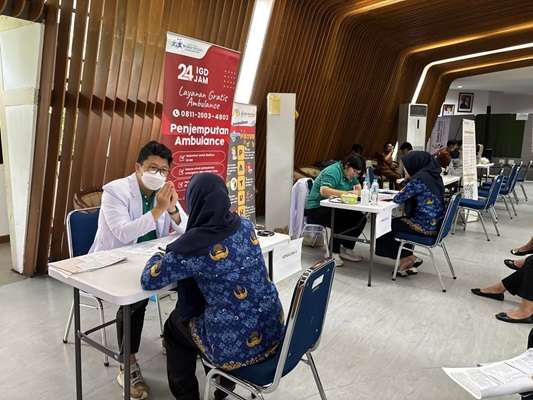
PORTALJABAR, BANDUNG CITY - Member of Commission IV of the Bandung City DPRD, Agung Firmansyah Sumantri, educated the public about the importance of routine blood tests to detect anemia, thalassemia, leukemia, and various other blood disorders that often develop without symptoms in the SONATA Talkshow in Bandung City (10/6/2026).
Many blood disorders are only discovered after a person undergoes laboratory tests even though they feel healthy and have no complaints.
Agung explained that anemia is one of the most frequently found blood disorders with levels of severity ranging from mild, moderate, to severe.
"With mild anemia, a person often doesn't experience any symptoms because the body is still able to compensate. Symptoms usually only begin to appear when Hb levels are already very low," he said.
Symptoms that begin to appear include fatigue, lethargy, difficulty concentrating, and shortness of breath.
Some cases of anemia were discovered when residents underwent routine health checks.
Women are a group that is quite vulnerable to anemia due to menstruation and inadequate nutritional intake.
This condition also requires attention for women who are getting married and planning a pregnancy because anemia in mothers can increase the risk of health problems, including stunting in children.
Besides anemia, Agung reminded the public about hereditary blood diseases such as thalassemia and hemophilia which can be passed down from parents to children.
"Thalassemia is a concern because many sufferers are asymptomatic. If both partners carry the thalassemia trait, the child is at risk of developing thalassemia major, which requires lifelong blood transfusions," he explained.
Therefore, couples who are going to get married are advised to have a blood test to find out the possibility of blood disorders that can be passed on to their offspring.
Agung explained that routine blood tests can also help detect infections, autoimmune disorders, and blood cancers such as leukemia through examination of white blood cells or leukocytes.
Platelet abnormalities can also be an indicator of dengue fever, chronic infections, or blood clotting disorders.
"Sometimes blood diseases don't just exist in isolation, but can be a sign of other diseases in the body. Therefore, regular blood tests are crucial for early detection," he said.
Basic blood tests that include hemoglobin, leukocytes, and platelets can provide an initial picture of a person's health condition and are available at various health care facilities, including community health centers.
Citizens under 40 years of age without complaints can have regular health check-ups every few years.
People who often feel tired quickly, excessively sleepy, have difficulty concentrating, or experience complaints of unknown cause are advised to immediately undergo a blood test.
This education is expected to encourage people to be more concerned about their health and carry out early detection so that blood disorders can be identified before they develop into more serious conditions.
(Bandung City Communications and Information Service/bhf)
 Share News Via
 facebook
 twitter
 whatsapp
 email
email