

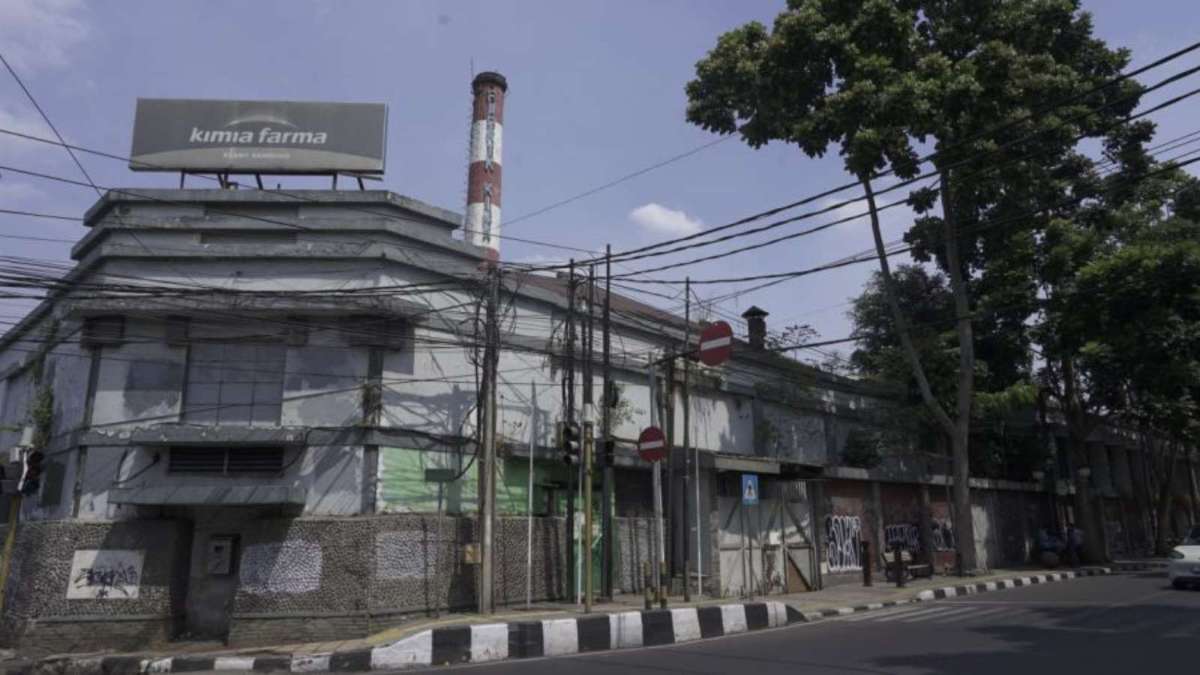
PORTALJABAR, BANDUNG CITY - The Bandung City Government has highlighted the history of the former Quinine Factory as an important trace of the development of the Indonesian pharmaceutical industry since 1896.
The former Quinine Factory is located in the Pajajaran area, Cicendo District, and was established on 29/6/1896 under the name Bandoengsche Quinine Fabriek NV
At that time, quinine was the main ingredient in malaria drugs, so it had strategic value for public health needs.
The high demand for malaria treatment encouraged the development of the quinine industry and connected Bandung to the international quinine trade.
PT Kimia Farma Asset Management Manager Hilman Firmansyah said the Quinine Factory is part of the journey of the Indonesian pharmaceutical industry.
"This quinine factory has immense historical value. Established in 1896, this area is part of the history of the Indonesian pharmaceutical industry and demonstrates how Bandung was connected to the global quinine trade at that time," said Hilman.
Management of the factory changed in 1939 when it was handed over to the Indische Combine Voor Chemische Industrie (Inschen).
During the Japanese occupation around 1942, the factory was taken over and known as Rikuyun Kinine Seizoshyo.
After Japan surrendered in 1945, the factory was returned to Dutch management before being nationalized by the Indonesian government in 1958.
The Quinine Factory then became part of the journey of the state-owned pharmaceutical and medical equipment company until it developed into PT Kimia Farma (Persero) Tbk.
During its heyday, Bandung quinine not only met local needs, but also entered the international trade network.
The 1916 trade documents record transactions and credits for shipments of quinine from Bandung to Russia as part of international trade.
During the Japanese occupation, the production of quinine pills and tablets from Bandung was mostly sent to Japan and other regions.
The quinine was used to support Japanese interests during the Pacific War, while the people received a total of quinine.
Total quinine is quinine that has not been separated from the various alkaloids contained in it.
Operational needs then prompted the transfer of production to a new factory in Banjaran, Bandung Regency in 2020.
Hilman believes that this history shows the contribution of the Quinine Factory to health and international trade at that time.
"This isn't just a story about a building or a factory, but about how an industry in Bandung once played a role in the global quinine supply chain. Therefore, its historical value is important to continue to be introduced to the current generation," he said.
Today, the former Quinine Factory serves as a reminder of the journey of the Indonesian pharmaceutical industry and Bandung's connection to global health dynamics.
(Bandung City Communications and Information Service/bhf)
 Share News Via
 facebook
 twitter
 whatsapp
 email
email