

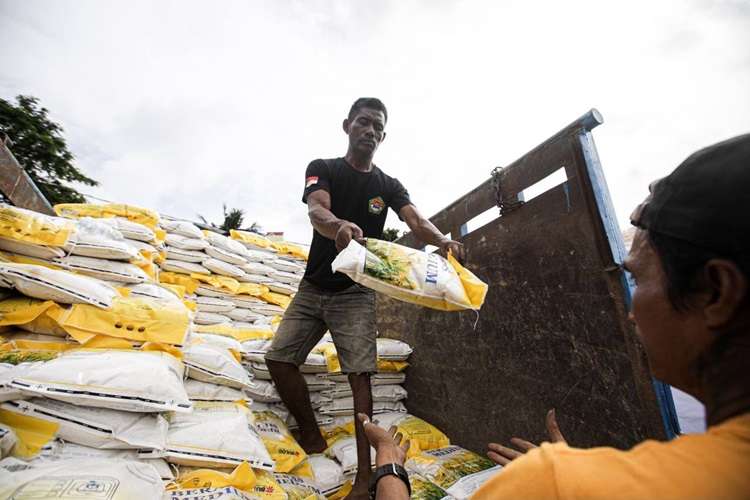
PORTALJABAR, BANDUNG CITY - The Food Security and Agriculture Service (DKPP) distributes nutritious food through the 2026 Food Program for Areas Vulnerable to Food Insecurity and Stunting (Pangersa).
Head of the Bandung City DKPP, Gin Gin Ginanjar, said that Pangersa ensures that vulnerable groups receive sufficient, nutritious, safe, and affordable food.
"This program is also part of efforts to reduce poverty, address food insecurity, and prevent stunting," said Gin Gin, September 29, 2026.
Pangersa also provides education on Diverse, Balanced Nutrition and Safe (B2SA) consumption patterns so that families understand their daily nutritional needs.
In 2026, Pangersa targeted 1,832 families consisting of 1,232 Families Vulnerable to Food Insecurity (KRP) and 600 Families at Risk of Stunting (KRS).
Determination of KRP recipients uses the National Socio-Economic Single Data (DTSEN) Deciles 1–4 with priority given to non-assistance recipients.
This priority targets people who have not received the Family Hope Program (PKH) or non-cash food assistance (BPNT) or basic necessities.
Meanwhile, KRS recipients are determined based on data from the Bandung City Population and Family Planning Control Service (DPPKB).
"The determination of recipients is carried out in a targeted and data-based manner, which is then verified and validated by the regional government to ensure that aid reaches the right targets," said Gin Gin.
The location of Pangersa's intervention was also determined based on the Food Security and Vulnerability Atlas (FSVA) of Bandung City.
Priority areas one to three based on the level of food vulnerability are the targets of the program's intervention.
Each recipient received five kilograms of rice, about one kilogram of catfish, one chicken, and 15 eggs.
Specifically for families at risk of stunting, assistance includes vegetables to support the need for a more diverse and nutritious diet.
Gin Gin ensures that all food ingredients have undergone safety and suitability checks before being distributed to the public.
"Food safety inspections are carried out by the relevant divisions of the Food Security and Agriculture Service," he said.
Distribution to 600 KRS has been carried out in two stages, namely 8–9 September and 18 and 24 September 2026.
The distribution took place in eight sub-district locations, targeting families at risk of stunting.
Furthermore, the Bandung City DKPP will distribute aid to 1,232 KRPs spread across eight sub-districts.
Six sub-districts will be the locations for KRP distribution, which is planned to take place in two stages during October 2026.
The first phase of KRP distribution is planned for early October, while the second phase will take place in mid-October 2026.
As of September 25, 2026, Pangersa realization reached 32.75 percent or 600 recipients out of a total of 1,832 targets.
Gin Gin said that Pangersa is a stimulant and educational program to meet food needs while building family understanding.
The program encourages recipient families to understand the importance of consuming diverse and nutritious foods in their daily lives.
The program implementation involves the DKPP, Social Services, DPPKB, and regional elements to ensure that data and aid distribution are on target.
The collaboration also supports poverty alleviation and stunting prevention through data-driven food interventions.
"The government ensures that vulnerable groups receive sufficient, nutritious, safe, and affordable food," said Gin Gin.
(Bandung City Communications and Information Service/bhf)
 Share News Via
 facebook
 twitter
 whatsapp
 email
email