

PORTALJABAR, BANDUNG CITY - The Bandung City Government is encouraging data-based governance transformation to produce more appropriate policies for the community.
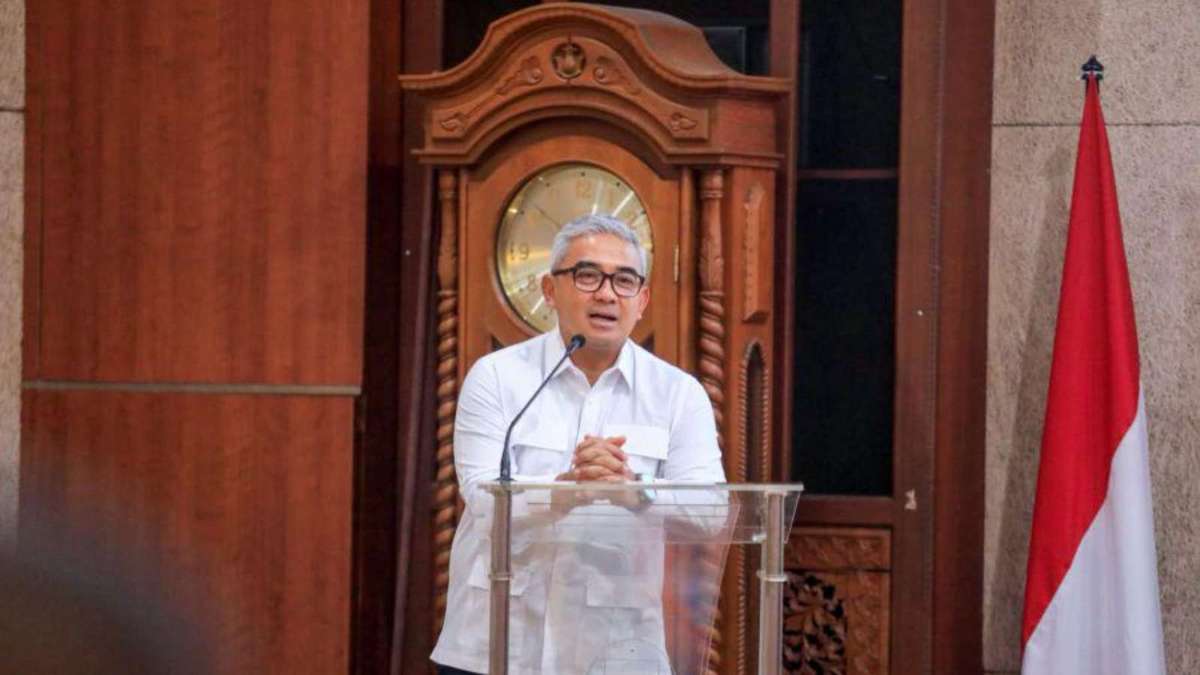
Bandung Mayor Muhammad Farhan conveyed this when opening NGULIK (Chat and Discussion on Information and Communication Technology, Data and Statistics) online via Zoom Meeting (13/8/2026).
Farhan believes that the government can no longer make policies based solely on experience, estimates, or habits in dealing with urban problems.
Utilizing data helps the government understand changes so that the resulting policies can more accurately address community needs.
"Data in governance essentially positions data not merely as an administrative product, but as a crucial instrument in decision-making," said Farhan.
According to him, data needs to be used to identify problems, affected parties, the location of the incident, and the causes of the problem before the government determines intervention.
This need is increasingly important because the city of Bandung has an area of around 170 square kilometers with a population of nearly 3 million people.
High population mobility means that the need for public services, health, education, and the digital economy continues to change.
Farhan said Seoul's experience in building a smart city could be a lesson for Bandung in developing data-driven governance.
"Ultimately, a smart city isn't about how much technology is implemented or how much money is spent on sensors and app development. What matters most is how this digitalization has a broad impact on society," he said.
According to Farhan, Bandung does not need to completely imitate Seoul, South Korea, in building data-based governance.
Seoul's consistency in integrating data across government organizations and involving the central government, provinces, and the community is considered relevant to study.
Good and transparent data management can also serve as a communication bridge between the government and the public while building public trust.
Meanwhile, Ambassador for International Relations of the Seoul Metropolitan Government, Koo Hong-seok, said that relations between Bandung and Seoul have been established since 2016.
2026 marks the 10th anniversary of the partnership between the two cities to share policies, experiences, and urban governance practices.
Koo explained that Seoul continues to leverage data and digital technology to respond to changes in the urban environment and the increasingly diverse needs of its citizens.
"We sincerely hope this will be a valuable opportunity for all of us to share experiences and opinions with one another," he said.
Koo hopes that relations between Bandung and Seoul will continue to grow through the exchange of experiences that will benefit both cities.
(Bandung City Communications and Information Service/bhf)
 Share News Via
 facebook
 twitter
 whatsapp
 email
email