

PORTALJABAR, BANDUNG CITY - Welcoming the 81st Anniversary of the Independence of the Republic of Indonesia, the Gedung Sate and Gasibu Field areas, Bandung City, continue to be arranged to be more open and comfortable for the public.
This redevelopment also transformed the face of the Gedung Sate area. The Gedung Sate courtyard was reconfigured to connect with the Gasibu area, while Jalan Diponegoro was retained and will function as a public space.
Amidst the area's development, Gedung Sate retains its historical significance. The public can learn about the long history of this iconic West Java building through the Gedung Sate Museum within the complex.
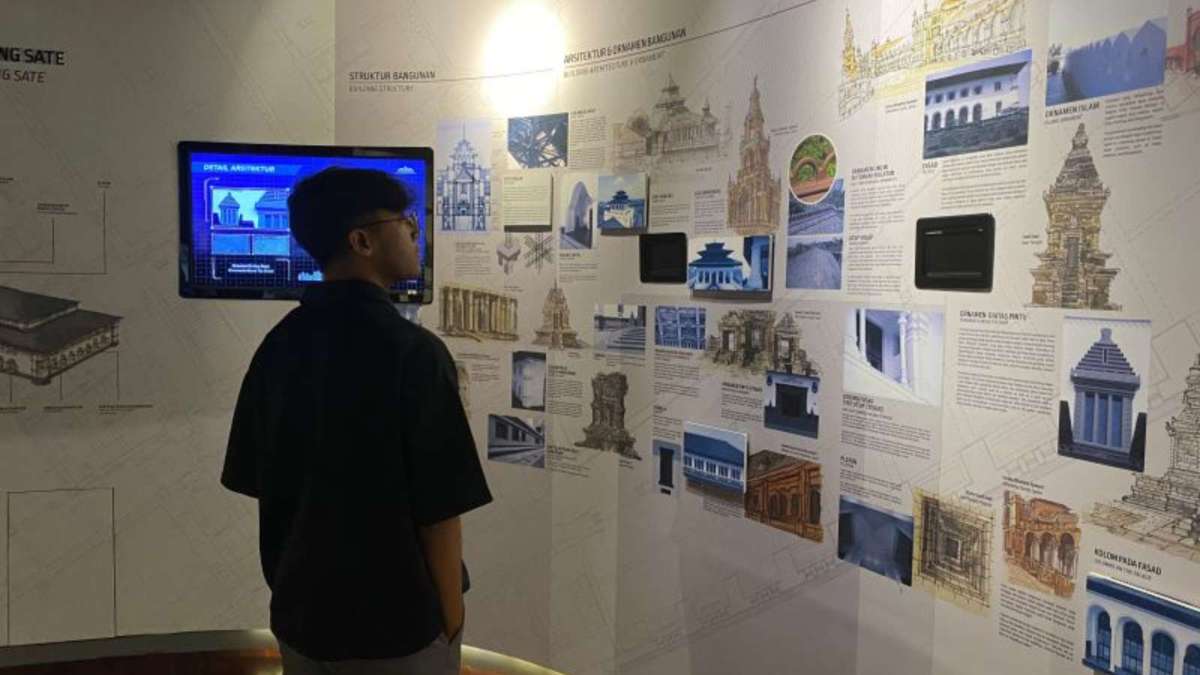
The Gedung Sate Museum presents information about the history of the building from time to time by utilizing interactive technology through the Smart Museum concept.
Construction of the Gedung Sate began in 1920 and in 1924 became part of the central government office complex, or Gouvernements Bedrijven . During its development, the building was used as the office of the public works and irrigation department.
Gedung Sate also once served as a central library, combining collections from seven government offices. With changes in government and service needs, Gedung Sate's function continued to evolve, eventually becoming recognized as a symbol of West Java.
This historical journey is part of what is introduced to the public through the Gedung Sate Museum.
For visitors from outside the area, the museum is one of the places to learn about the history of Bandung City and West Java directly.
Perah, a visitor from Palembang, said it was her first time visiting Gedung Sate. She learned a wealth of new information about the building's history and the city of Bandung.
"I've learned a lot of new information. Especially about history, it's also given me a deeper understanding of Bandung's history," he said when met on Wednesday (August 12, 2026).
According to Perah, a direct visit to Gedung Sate provides a different experience compared to only getting information through television or other media.
"We can learn about history not only in our own region, but also in other regions, so we'll be happier and more content," he said.
Besides its historical significance, the architecture of Gedung Sate is also a draw for visitors. Perah said the building's design, which combines European and Asian architectural elements, was one of the reasons she was drawn to see Gedung Sate in person.
Meanwhile, the Gedung Sate and Gasibu areas were reorganized to create a more open public space for the community. The Gedung Sate courtyard was also arranged to match the height of the Gasibu area, creating a more unified appearance for the two spaces.
West Java Governor Dedi Mulyadi previously said the arrangement would make the Gedung Sate courtyard more open to the public.
"The yard will be more open and wider," said Dedi.
With this area arrangement, Gedung Sate has not only become an icon of West Javanese government and architecture, but also a public space and a place for the public to learn about the history of the region.
For those interested in learning more about the history of Gedung Sate, the Gedung Sate Museum is an excellent educational destination in Bandung. Admission is Rp5,000 per person.
(dika-magang/rka)
 Share News Via
 facebook
 twitter
 whatsapp
 email
email